July 8, 2026
Your front desk runs on the reservation system behind it. When that software is clunky, every double-booking, missed rate change, and slow check-in lands on your staff and your guests.
Pick the wrong platform, and you are stuck paying high commissions, juggling channels by hand, and losing direct bookings you should have kept. Pick the right one and your rooms sell themselves while your team focuses on the guest in front of them.
The trouble is that every vendor claims to be the best hotel reservation software, so the choice gets noisy fast.
This guide cuts through it with eight leading systems compared side by side, an honest look at what each one does well, where it falls short, and who it actually fits.
Booking behavior has shifted, and your software has to keep up. The global hotel reservation software market is valued at about $1.13 billion in 2026 and is projected to reach $2.62 billion by 2035, growing at nearly 10% a year as more properties move off spreadsheets and legacy installs. Guests are booking on their phones, too: the same research shows mobile devices generated 70.5% of global online travel traffic in 2024, so a reservation system without a fast, mobile-ready booking engine is leaving money on the table.
There is also the commission problem. With OTA commissions typically running 15% to 30% per booking, the right reservation software pays for itself by winning back direct, higher-value, lower-cancellation reservations. Choosing well is no longer a back-office decision. It is a revenue decision.
We focused on platforms that real hotels run day to day, not niche tools or abandoned products. Each system below earns its place on a consistent set of criteria, so you can compare like with like:
No single product wins on every axis. The goal is to match the system to your property, not to crown one champion.
Here is the quick comparison. Use it to shortlist two or three systems, then read the detailed breakdowns below.
| Software | Best for | Starting price (approx.) | Standout strength |
|---|---|---|---|
| Cloudbeds | Growing independents and groups wanting all-in-one | Custom, from ~$200/mo | Unified PMS, booking engine, and channel manager |
| Mews | Modern and boutique hotels wanting automation and open APIs | Custom, from ~$200/mo | Cloud-native platform with a deep integration marketplace |
| Sirvoy | Budget-conscious small properties, B&Bs, and hostels | From ~$9/mo | Transparent low pricing and fast setup |
| RoomRaccoon | Independents that want hands-off automation | From ~$115/mo | Automated upsells, dynamic pricing, contactless flow |
| Little Hotelier | Small hotels, B&Bs, and guesthouses | From ~$89/mo | Purpose-built all-in-one for small properties |
| SiteMinder | Hotels that prioritize distribution and channel reach | Channel manager from ~$60/mo | Market-leading channel manager and distribution |
| Hotelogix | Small-to-mid hotels in global and emerging markets | From ~$4/mo entry tier | Affordable cloud PMS with multi-property support |
| WebRezPro | Properties that want a deep, configurable PMS | Custom, from ~$150/mo | Feature depth across many property types |
Cloudbeds is one of the most widely used all-in-one platforms, combining a property management system, booking engine, and channel manager in a single login. It suits independents and small groups that want to run reservations, distribution, and front-desk operations without stitching together separate tools.
Best for: growing independent hotels and small groups that want one unified system.
Key features:
Pros: genuinely all-in-one, so fewer moving parts; scales as you grow; reliable channel sync.
Cons: pricing is quote-based and can climb as you add rooms and modules; more system than a very small B&B needs.
Pricing: custom quotes, commonly starting around $200 per month and rising with property size and add-ons.
Mews is a cloud-native platform built for hotels that want automation and an open ecosystem. Its strength is the integration marketplace and API, which let modern and boutique properties connect payments, guest apps, and operational tools around a flexible core.
Best for: modern and boutique hotels that value automation and open integrations.
Key features:
Pros: clean, modern interface; deep automation; excellent for connecting a wider tech stack.
Cons: there is a learning curve for staff used to legacy systems, and the total cost grows once you add modules.
Pricing: custom, typically starting around $200 per month and scaling with property size and selected modules.
Sirvoy is the budget-friendly option that does not feel stripped down. It is popular with small properties, hostels, and B&Bs that want transparent pricing, a quick setup, and the essentials handled well without a steep contract.
Best for: budget-conscious small properties, hostels, and B&Bs.
Key features:
Pros: one of the most affordable transparent options; easy to learn; no long onboarding.
Cons: fewer advanced revenue and automation features than premium platforms; better for smaller, simpler operations.
Pricing: starts around $9 per month and scales with the number of rooms and features you enable.
RoomRaccoon leans hard into automation. It is built for independent hoteliers who want the system to handle upsells, dynamic pricing, and contactless check-in so a small team can run a property with less manual work.
Best for: independent hotels that want hands-off automation.
Key features:
Pros: strong automation reduces front-desk workload; modern guest-facing features; good fit for lean teams.
Cons: higher entry price than the budget tools; some advanced features sit on higher plans.
Pricing: tiered, commonly starting around $115 per month depending on rooms and features.
Little Hotelier is purpose-built for small accommodations. Rather than scaling a big-hotel system down, it gives B&Bs, guesthouses, and small hotels an all-in-one that matches how they actually operate.
Best for: small hotels, B&Bs, and guesthouses.
Key features:
Pros: tailored to small-property workflows; quick to adopt; predictable pricing.
Cons: limited room to grow if you expand into a larger group or need enterprise features.
Pricing: typically starts around $89 to $109 per month for small properties.
SiteMinder made its name in distribution, and that is still its core strength. If your priority is reaching more channels and keeping inventory in sync across a wide network of OTAs, its channel manager is among the most established in the industry.
Best for: hotels that prioritize distribution and channel reach.
Key features:
Pros: exceptional distribution reach; reliable inventory sync; strong for properties leaning on many channels.
Cons: full reservation functionality often requires add-ons, so costs can stack; it is more a distribution backbone than a deep PMS on its own.
Pricing: the channel manager starts around $60 per month, with booking engine and other tools priced separately.
Hotelogix is an affordable cloud PMS with a strong footprint in global and emerging markets. It gives small-to-mid hotels multi-property management and the core reservation tools at a price point that is hard to match.
Best for: small-to-mid hotels, especially in global and emerging markets.
Key features:
Pros: very affordable entry tier; multi-property support; solid core feature set.
Cons: the interface feels dated next to newer cloud platforms, and some workflows take more clicks.
Pricing: entry tiers start very low, around $4 per room per month, with higher plans for more features.
WebRezPro is a deep, highly configurable cloud PMS that serves a wide range of property types, from inns to larger hotels. It appeals to operators who want flexibility and a broad feature set rather than a simplified, one-size product.
Best for: properties that want a deep, configurable PMS.
Key features:
Pros: extensive features and configuration; flexible for unusual setups; mature and stable.
Cons: pricing is quote-only, and the breadth of options means a longer setup and learning period.
Pricing: custom quotes, commonly starting around $150 per month depending on size and configuration.
Start with your property size and the way you sell rooms. A small B&B and a boutique group have very different needs, and the systems above are deliberately built for different ends of that range.
If you run a small or independent property, prioritize transparent pricing and fast setup. Tools like Sirvoy, Little Hotelier, and Hotelogix keep costs predictable, which matters because high implementation cost is one of the most common reasons small hotels delay upgrading at all. If you want automation to offset a small team, RoomRaccoon earns its higher price. If you are a growing independent or small group, an all-in-one like Cloudbeds or a modern, integration-friendly platform like Mews gives you room to scale. If distribution across many channels is your priority, SiteMinder is built for exactly that. And if you need deep configurability across an unusual property type, WebRezPro is worth the quote.
Whatever you shortlist, weigh three things beyond the feature list. First, the strength of the booking engine, since direct reservations are worth more. Second, the integrations you will actually use, including payments, point of sale, and guest-facing tech. Third, the quality of support, because a reservation system that goes down at check-in is a problem no feature list can fix.
HotelSmarters is not a reservation system, and the systems above will run your bookings, rates, and front desk. What HotelSmarters does is improve the experience your guest has once that reservation turns into a stay. Think of it as the layer that sits on top of whatever platform you choose.
Once a guest is booked and in the room, Hotel Interactive TV turns the screen into a branded welcome, services menu, and entertainment hub.
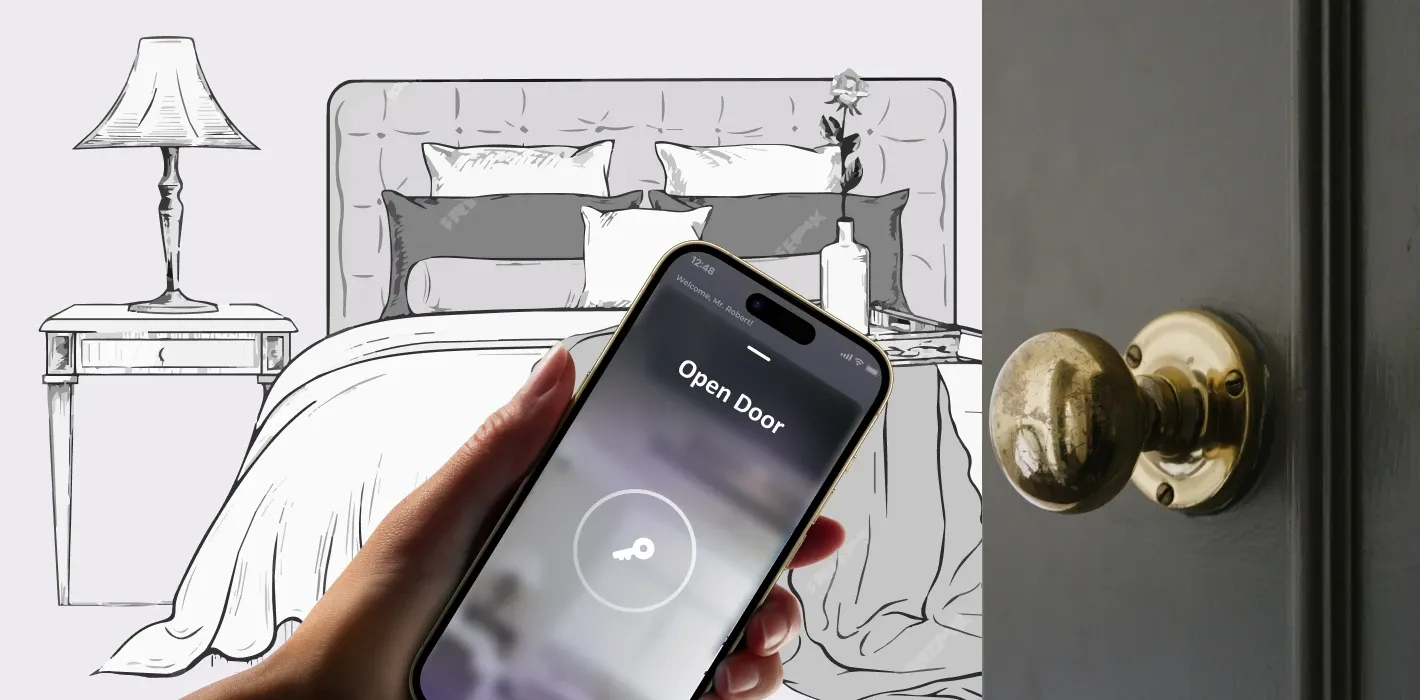
A Guest App puts requests, information, and in-stay services on the guest's own phone.
Hotel Casting Solution lets guests stream their own accounts to the room TV safely, and reliable Hotel WiFi keeps all of it running smoothly.
None of this replaces your reservation software. It builds on the stay your reservation software books. Once your reservation system is sorted, that is the next question worth answering.
The best hotel reservation software is the one that matches your property size, your channels, and your budget, not the one with the longest feature list. Shortlist two or three from the table above, request a demo, and test the booking engine before you commit.
And once your reservation system is running, let's talk about what runs on top of it. Get in touch with us or explore more at HotelSmarters to elevate the guest experience that begins after the booking.

Product Manager
Leads smart hotel tech products. Focused on interactive TV and PMS integrations. Turns guest needs into simple, effective solutions. Loves building products that improve hotel operations and enhance guest experience.