February 17, 2026
Gone are the days when accessibility in hospitality was just a “nice-to-have.” Today, it’s a must-have - an essential part of great hotel design and service. So, what is an accessible hotel room?
Simply put, an accessible hotel room is thoughtfully designed to accommodate guests with disabilities, reduced mobility, or sensory needs - ensuring a safe, comfortable, and seamless stay for everyone.
But what sets these rooms apart from standard ones? And why does accessibility matter beyond just checking a legal compliance box?
In this comprehensive guide, we’ll break it all down: from the key features of accessible rooms to the latest innovations making hotels more inclusive. Plus, we’ll share practical tips for hotels looking to step up their accessibility game. Because when hospitality is truly for everyone, everybody wins!
An accessible hotel room, also called a “mobility accessible room” or “ADA‐compliant room” (in the United States), is intentionally built or remodeled to accommodate guests with various disabilities or special requirements.
The accessible room meaning extends beyond mere physical modifications, though; it’s about ensuring every step of a guest’s stay from check-in to bedtime can be navigated comfortably and safely, regardless of their abilities.
Unlike standard hotel rooms, accessible rooms are designed with enhanced features to ensure comfort, safety, and ease of use for all guests. Here’s how they differ from standard rooms:
By integrating these thoughtful touches, accessible hotel rooms reduce physical barriers, helping travelers with disabilities maintain independence and dignity throughout their stay.
Investing in accessible hotel rooms comes with various benefits for hoteliers. We’ve outlined the top advantages below.
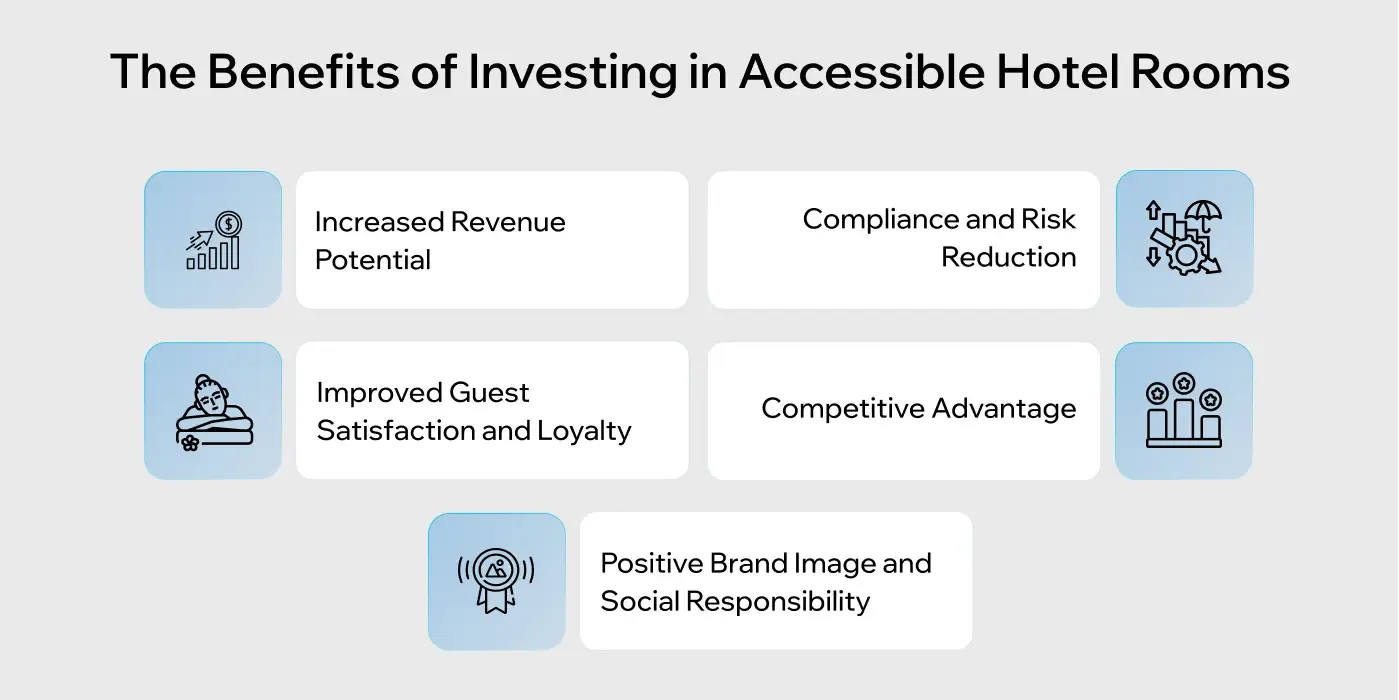
According to the World Health Organization, over 1.3 billion people worldwide experience significant disability, representing a large and often underserved market. Studies show that travelers with disabilities, along with their compaanions, spend an estimated $58.7 billion annually on travel in the U.S. alone. By ensuring accessibility, hotels can tap into this growing demographic and secure repeat bookings.
Accessible rooms improve the overall guest experience, strengthening brand loyalty and positive guest feedback. Features like roll-in showers, lowered furniture, and easy-to-reach controls create a seamless stay for guests with mobility challenges. Research by the Open Doors Organization found that 70% of travelers with disabilities would return to a hotel if they had a positive accessibility experience.
Failing to meet accessibility standards can result in costly legal consequences and damage to a hotel’s reputation. Adhering to regulations such as the Americans with Disabilities Act (ADA) or European accessibility guidelines ensures compliance while demonstrating a commitment to inclusivity. Moreover, accessible design elements such as visual and auditory emergency alerts enhance safety for all guests.
Hotels that prioritize accessibility gain a strong competitive edge. With 59% of travelers considering accessibility when booking accommodations, according to Skift Research, properties that excel in this area are more likely to capture market share. Moreover, accessibility upgrades can also improve operational efficiency, as universal design benefits all guests, not just those with disabilities.
Hotels that invest in accessibility demonstrate a commitment to diversity and inclusion, enhancing their corporate social responsibility (CSR) profile. This can lead to positive media coverage, partnerships with advocacy groups, and higher rankings on travel platforms that highlight accessible accommodations.
By proactively designing and marketing accessible rooms, hotels not only meet regulatory requirements but also cultivate guest loyalty, boost revenue, and differentiate themselves in an increasingly competitive market. Investing in accessibility isn’t just the right thing to do; it’s a smart business strategy.
Every accessible hotel room may vary slightly depending on the property’s location, age, and target market. Such design elements ensure that guests with mobility challenges, hearing impairments, or other disabilities can navigate their space with ease and comfort. Still, there are common features that define accessible hotel room requirements:
An accessible hotel room should have a zero-step entryway or a gently sloping ramp to ensure easy access. To prevent tripping hazards or mobility restrictions, smooth thresholds should be present between the entrance, the bathroom door, and the balcony (if applicable). These modifications allow guests using wheelchairs, walkers, or other mobility aids to enter and exit their rooms effortlessly.
To accommodate guests with mobility challenges, accessible hotel rooms should have a spacious floor plan that allows for unrestricted movement. In the U.S., the standard turning radius for wheelchair users is typically five feet (1.5 meters), ensuring that guests can navigate the sleeping area and bathroom without difficulty. Additionally, minimal or well-arranged furniture helps maximize space and prevents obstructions, making it easier for guests to move freely within the room.
Bathrooms in accessible hotel rooms must be designed to prioritize safety and ease of use. Many feature a roll-in shower or a low-threshold bathtub, both equipped with secure grab bars to assist guests with stability. Hand-held showerheads should be placed at an accessible height, along with shower seats or built-in benches for added comfort. Furthermore, wheelchair-accessible sinks, mirrors, and toiletries ensure that all amenities are within reach for guests with limited mobility.
The height of a bed in an accessible hotel room is crucial for guests who need assistance transferring from a wheelchair or mobility aid. Beds are typically positioned between 20–23 inches to allow for smooth and independent transfers. Additionally, there should be adequate space beneath the bed for lifting devices, ensuring that guests who require specialized equipment can use it without restrictions.
For guests with hearing or visual impairments, accessible hotel rooms include flashing or vibrating alarm clocks and smoke detectors to provide essential safety alerts. Televisions should be equipped with closed captions, while telephones with volume control or TTY devices allow guests with hearing difficulties to communicate effectively.
All essential room controls should be placed at a height that accommodates wheelchair users and guests with limited mobility. Light switches, thermostats, and power outlets should be installed at or below 48 inches to ensure ease of access. Similarly, closet rods and hangers should be lowered to a wheelchair-friendly height, allowing guests to organize and retrieve their belongings effortlessly.
In an emergency, accessible hotel rooms must have clearly marked exit routes that accommodate wheelchair users and guests with disabilities. Hotels should also ensure that staff are trained to assist guests with accessibility needs during evacuations. Proper emergency planning and well-defined protocols create a safer environment and ensure that all guests can exit the property safely and efficiently.
Taken together, these features illustrate what it means when a hotel room is accessible. By addressing even small hurdles like doorknob height or shower layout, hotels ensure every guest can navigate their space without difficulty.
Advancements in technology have opened new doors for making hotel rooms more accessible and convenient to everyone. Below are a few tech innovations redefining what accessible means for a hotel room:
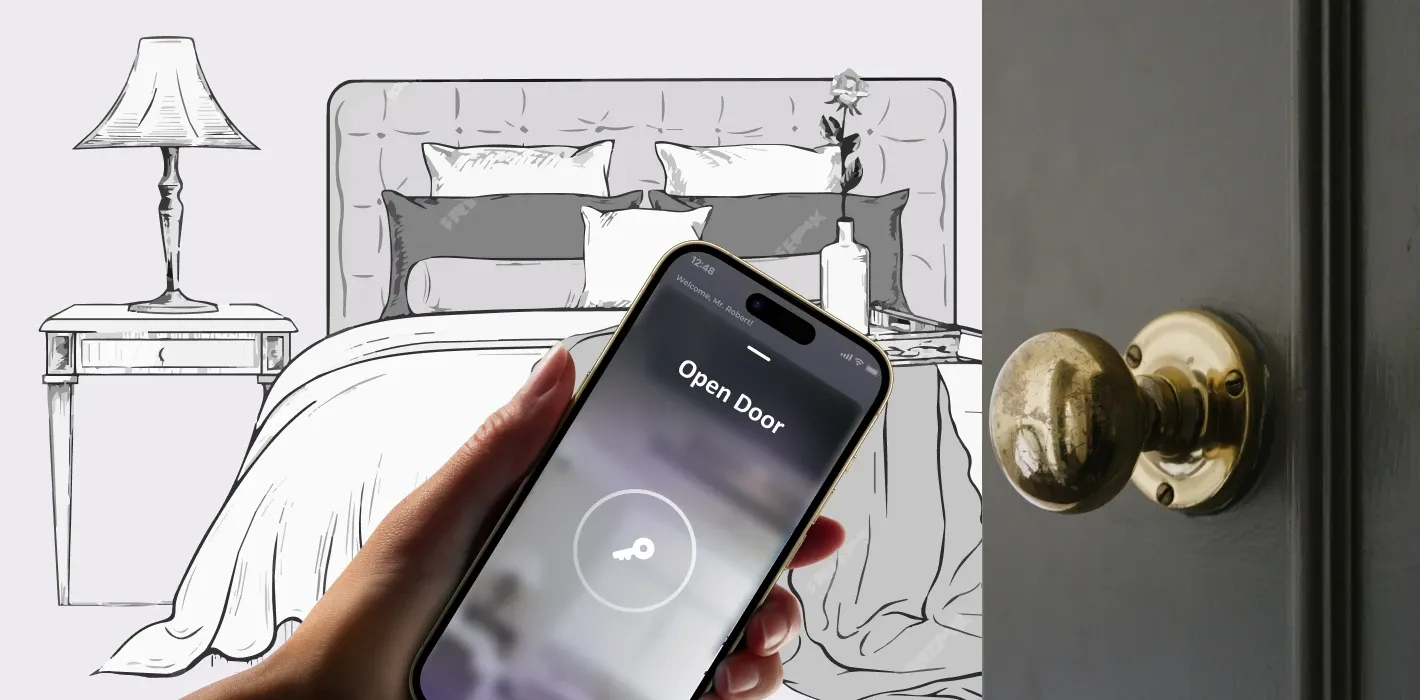
Keyless entry systems allow guests with limited mobility or dexterity to unlock their doors via an app, bypassing the need to handle traditional keycards. They also provide a straightforward interface for checking in or accessing property maps and instructions.
Systems like Amazon Echo or Google Assistant let users manage lighting, temperature, television, and curtains using voice commands. This is particularly beneficial for individuals with limited mobility, reduced hand function, or visual impairments, allowing them to adjust their environment effortlessly.
Hotel apps that offer screen-reading compatibility ensure guests with visual impairments can navigate menus, request room service, or access concierge services. These apps ensure a more independent and inclusive experience, enhancing overall guest satisfaction.
Hard-of-hearing guests can use the in-room TV or tablet to place calls through video relay interpreters. This allows them to place calls through sign language interpreters, ensuring effective communication with hotel staff and external contacts.
Many hotels now offer text-based communication platforms that allow guests to request assistance, ask questions, or report issues via automated text alerts and AI-driven chatbots. This feature is especially helpful for deaf and hard-of-hearing guests, enabling them to engage with hotel staff without needing to make a phone call.
So, are accessible hotel rooms better? The integration of smart hotel room technology often tips the scales in favor of a resounding yes. Not only do these innovations streamline the guest experience overall, but they cater specifically to the unique needs of travelers with disabilities.
HotelSmarters provides powerful solutions for hotels to showcase their accessible rooms to a growing market of travelers who prioritize inclusivity. As the demand for accessible travel options continues to rise, hotels have a unique opportunity to serve this important segment. Here’s how HotelSmarters can help:
By partnering with HotelSmarters, hotels can effectively reach a high-value, often overlooked market while enhancing their brand’s commitment to inclusivity. Investing in accessibility is not just a compliance measure; it’s a strategic move to boost revenue, guest satisfaction, and long-term loyalty.
There’s a common misconception that only new properties or luxury hotels can become accessible. In reality, hotels of every size and budget can make impactful changes. Below are five actionable tips for any hotel manager or owner looking to improve accessibility, especially for hoteliers wondering, “Can anyone book an accessible room, and how do we ensure their comfort?”
Conduct a thorough review of facilities, focusing on entrances, hallways, guestrooms, restrooms, and common areas. Enlist the help of professionals or partner with disability advocacy groups to identify potential barriers.
Train front-desk staff on handling reservations that request specific accessibility features. Provide housekeeping and maintenance teams with guidelines on maintaining accessible equipment (e.g., shower chairs, roll-in shower drains). It’s also important to educate staff on respectful and appropriate language and behavior, ensuring guests with disabilities feel comfortable.
Whenever renovating, consider universal design (the practice of designing products and environments to be usable by all). It’s often more cost-effective to integrate universal design from the start than to retrofit later.
Dedicate a section of your website to detailing accessible features. Include room photos, floor plans, and measurements (e.g., door widths). Outline any accessible hotel room requirements that may vary by guest or by local regulations.
Encourage guests to share feedback on accessibility so you can address any shortcomings. Keep an open mind about modifications: new technologies or small tweaks (like adding a portable ramp) can make a big difference.
So, what is an accessible hotel room? In a practical sense, these tips underscore that it’s a combination of structural design, staff awareness, and transparent communication with guests.
Understanding what an accessible hotel room is goes far beyond ticking boxes for regulatory compliance. It encompasses thoughtful design, cutting-edge technology, and a commitment to inclusivity. With features like wider doorways, roll-in showers, lowered switches, and assistive technology, an accessible room can transform the travel experience for people with disabilities - and benefit countless other travelers in the process.
From small boutique properties to sprawling resorts, hotels that embrace accessibility send a powerful message: Everyone is welcome here. By prioritizing universal design principles, training staff, adopting new technologies, and clearly communicating available features, the hospitality industry can ensure that traveling remains a joy for all guests, regardless of their physical or sensory abilities.
Integrating smart accessibility solutions is easier than ever with HotelSmarters. Our innovative solutions seamlessly connect assistive technology, in-room smart controls, and personalized guest experiences, ensuring your hotel remains inclusive, efficient, and ahead of industry trends.
Contact HotelSmarters today to discover how our technology can transform the guest experience.

Content Manager
Anush Sargsyan is a content manager specializing in B2B content about OTT streaming technologies and digital media innovation. She creates informative, engaging content on video delivery, OTT monetization, and modern media technologies. The goal is to help readers easily understand complex ideas. Her writing is the bridge between technical detail and practical insight, making advanced concepts accessible for both industry professionals and general audiences.