June 25, 2026
Pick the wrong system and you feel it every shift: double bookings from a channel that didn't sync, a front desk drowning in manual entry, and guests who notice when the basics slip. The best hotel management software does the opposite. It quietly runs reservations, the front desk, your channels, payments, and reporting from one place, so your team can spend time on guests instead of spreadsheets. The hard part is choosing. The market is crowded, pricing is often hidden behind a quote, and every vendor claims to be the best fit for everyone. This guide compares 12 leading platforms side by side, with honest pros, cons, pricing, and who each one is actually best for.
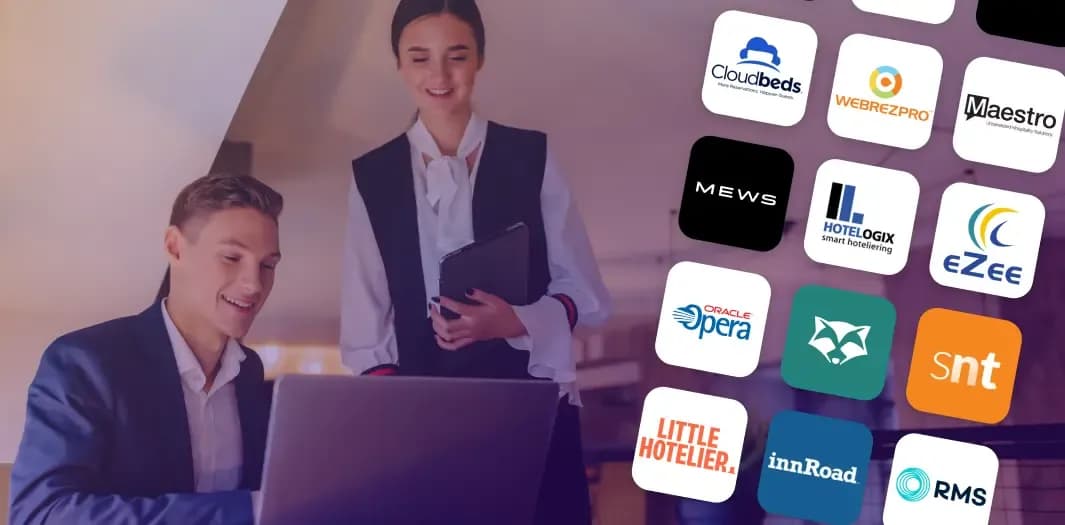
Here is a quick comparison before the detailed breakdowns. Use it to shortlist two or three platforms, then read their full profiles below.
| Software | Best for | Starting price (indicative) | Standout strength |
|---|---|---|---|
| Cloudbeds | All-in-one for independents and small chains | Quote-based (small properties often ~$100+/mo) | Unified PMS, channel manager, and booking engine |
| Mews | Modern cloud PMS for scaling and multi-property | ~$15–30/room/month (base from ~€300/month) | Open API and extensive integration marketplace |
| Oracle OPERA Cloud | Large hotels and enterprise chains | Quote-based (enterprise) | Enterprise-grade scalability and functionality |
| Little Hotelier | B&Bs and very small properties | From ~$109/month | Simple all-in-one solution for small teams |
| Hotelogix | Budget cloud PMS for small-to-mid-sized hotels | From ~$3.99/room/month (freemium available) | Low-cost entry point |
| RoomRaccoon | Automation-focused independent hotels | From ~$300/month | Workflow automation and upselling |
| innRoad | US independent hotels seeking an all-in-one PMS | Typically ~$150/month | Bundled PMS, booking engine, and payment system |
| WebRezPro | Diverse property types | From ~$10/room/month | Flexible support for unique property models |
| eZee Absolute | Global and emerging markets | Quote-based (tiered by room count) | Comprehensive features at a competitive price |
| Maestro PMS | Independent luxury hotels and resorts | Quote-based | Cloud or on-premises deployment options |
| Stayntouch | Mobile-first, contactless guest experiences | Quote-based | Mobile check-in and guest-facing workflows |
| RMS Cloud | Multi-property groups and mixed hospitality | From ~$55/month | Multi-property and mixed-asset management |
Pricing here is indicative and mostly quote-based. Confirm current rates directly with each vendor, since they vary by room count, modules, payment fees, and contract terms.
A hotel management system - often used interchangeably with a property management system (PMS) or hotel property management software - is the operational core of your property. It replaces the patchwork of spreadsheets, paper logbooks, and disconnected tools that slow a front desk down.
At a minimum, a strong platform handles reservations and the front desk (check-in, check-out, room assignment), a channel manager that keeps rates and availability in sync across OTAs and your own site, a booking engine for direct reservations, housekeeping coordination, point-of-sale for on-property charges, and reporting that tells you how the business is actually doing.
This category is growing fast. The global hotel and hospitality management software market was valued at USD 4.18 billion in 2025 and is projected to reach USD 7.03 billion by 2033, a compound annual growth rate of 7.2%, according to Grand View Research. Cloud-based deployment now accounts for the largest share of that market, driven by lower upfront cost and the flexibility small and mid-size hotels need.
We looked at the criteria that actually matter when you live inside a system every day, not just the feature checklist on a sales page.
Core PMS features came first: reservations, front desk, housekeeping, and reporting that you can trust. Then integrations - especially a built-in or tightly connected channel manager and booking engine, since a system that doesn't sync your channels creates more work than it saves. We weighed ease of use and onboarding, the quality and availability of support, scalability for growth or multiple properties, pricing transparency, and the cloud versus on-premise choice.
One trend shaped our thinking. Among hotel owners, 98% say they have begun incorporating AI into their business, but only 32% say it is embedded across most of their operations, per Hotel Technology News reporting on the Wyndham 2026 Owner Trends Report. The takeaway for buyers is simple: an integrated, well-supported platform beats a pile of disconnected point tools you have to stitch together yourself.
Cloudbeds bundles a PMS, channel manager, booking engine, and payments into one platform, which makes it a popular all-in-one choice for independent hotels, hostels, and small groups that don't want to manage multiple vendors.
Best for: All-in-one operations for independents and small chains.
Key features:
Pros:
Cons:
Pricing: Quote-based; smaller properties commonly land around $100+ per month depending on rooms and modules.
Mews is a modern, cloud-native PMS built around an open API and a deep integration marketplace. It appeals to design-forward and scaling properties that want to automate routine tasks and connect best-of-breed tools.
Best for: Modern cloud operations, scaling and multi-property groups.
Key features:
Pros:
Cons:
Pricing: Roughly $15-30 per room per month reported, with a base typically from around €300 per month; confirm by quote.
Oracle OPERA Cloud is the enterprise standard for large hotels and global chains. It offers the depth, configurability, and scale that complex, high-volume operations require.
Best for: Large hotels and enterprise chains.
Key features:
Pros:
Cons:
Pricing: Quote-based, positioned for enterprise budgets.
Little Hotelier is purpose-built for very small properties. It packages a simple front desk, booking engine, and channel manager for owners who run the place themselves and want something they can learn in an afternoon.
Best for: B&Bs, guesthouses, and very small properties.
Key features:
Pros:
Cons:
Pricing: From around $109 per month, often with a small booking fee; free trial available.
Hotelogix is a budget-friendly cloud PMS aimed at small-to-mid-size hotels that want core functionality without a heavy price tag. A freemium tier lowers the barrier to entry further.
Best for: Budget-conscious small-to-mid hotels.
Key features:
Pros:
Cons:
Pricing: From around $3.99 per room per month; freemium tier available; a 10-room Premium plan lands near $80 per month.
RoomRaccoon leans into automation. It targets independent hotels that want to cut manual work with automated check-in, upselling, and housekeeping workflows.
Best for: Automation-first independent hotels.
Key features:
Pros:
Cons:
Pricing: From around $300 per month; free trial available.
innRoad is an all-in-one platform popular with US independents. It bundles the PMS, booking engine, channel management, and payments so smaller operators can run everything from one login.
Best for: US independents wanting all-in-one plus payments.
Key features:
Pros:
Cons:
Pricing: Around $150 per month typical; some plans start near $10 per room per month.
WebRezPro is a flexible cloud PMS that fits a wide range of property types, from inns and lodges to vacation rentals and small hotels. Its adaptability is the main draw.
Best for: Mixed and diverse property types.
Key features:
Pros:
Cons:
Pricing: From around $10 per room per month; no setup fee.
eZee Absolute, part of Yanolja Cloud, delivers a broad feature set at a value price, which makes it popular in global and emerging markets where budgets are tighter.
Best for: Value-focused properties in global and emerging markets.
Key features:
Pros:
Cons:
Pricing: Quote-based, tiered by room count; 14-day trial available.
Maestro PMS serves independent luxury hotels and resorts, with a distinguishing feature most cloud rivals lack: the choice between cloud-hosted and on-premise deployment for properties that want to keep control in-house.
Best for: Independent luxury, resorts, and properties wanting on-prem control.
Key features:
Pros:
Cons:
Pricing: Quote-based; available cloud-hosted or on-premise.
Stayntouch is built mobile-first around a contactless guest experience. It suits hotels that want guests to check in on their phones and staff to work from a tablet rather than a fixed desk.
Best for: Mobile-first, contactless guest experiences.
Key features:
Pros:
Cons:
Pricing: Quote-based; not publicly listed.
RMS Cloud manages multi-property portfolios and mixed hospitality assets, including parks and groups, which makes it a strong fit for operators running more than one type of property.
Best for: Multi-property groups, parks, and mixed hospitality.
Key features:
Pros:
Cons:
Pricing: From around $55 per month; full pricing is quote-based.
Start with size and segment. A B&B or guesthouse is best served by a simple all-in-one like Little Hotelier, while an enterprise chain needs the depth of a platform like Oracle OPERA Cloud. Most independents and small groups land somewhere in the middle, where a cloud all-in-one earns its keep.
Weigh cloud versus on-premise. Cloud-based hotel management software is the default for most properties now because it lowers upfront cost and frees you from managing servers; on-premise still appeals to properties that want full in-house control.
Run an integration checklist. Confirm the system has, or cleanly connects to, a channel manager, a booking engine, your payment processor, and your POS. A gap here is where manual work creeps back in.
Finally, look at total cost, not just the headline subscription. Add implementation and onboarding, payment processing fees, and any per-module charges. Then confirm the real number with the vendor, since most pricing in this category is quote-based.
A PMS runs your operation. It does not, on its own, shape what a guest sees and touches in the room - and that is increasingly where stays are judged. In J.D. Power's 2025 North America Hotel Guest Satisfaction study, 40% of guests said having a smart TV or the ability to stream their own content is a necessary hotel amenity, up from 21% in 2019, as reported by Hotel Dive.
That is the layer your PMS does not cover. Once your management software is sorted, the guest-facing stack is the next question: a hotel interactive TV system that lets guests stream and access services from the screen, a hotel guest app for requests and information, in-room casting so guests can play their own content safely, and reliable hotel WiFi underpinning all of it. This layer complements whatever PMS you choose rather than replacing it. If you want to see how the guest-tech layer fits alongside your management system, get in touch with us.
Choose the management platform that fits your property's size, segment, and budget, then make sure the guest experience keeps pace with it. Once your PMS is sorted, the next question is what runs on top of it in the room and on the guest's phone. To map out the guest-facing layer alongside your system, get in touch with us or explore more at HotelSmarters.

Content Manager
Anush Sargsyan is a content manager specializing in B2B content for the hospitality industry, with a focus on hotel technology and digital guest experiences. She creates informative, engaging content on hotel apps, smart room solutions, and modern hospitality innovations. Her goal is to help hoteliers and guests easily understand how technology enhances the stay experience.