
March 16, 2026
Ignoring sustainability comes with a very high cost.
High enough to the point that the question isn't if you should implement sustainable practices, it's how.
But before you roll your eyes and picture guests refusing plastic cups, let's get one thing straight: sustainability isn't about sacrifice.
For your hotel, it's more about making choices that improve guest experiences and reduce operational costs.
This guide is for hotels that want to make sustainable changes valued by guests.
Here you'll find strategies, trends, and technologies that help your hotel become a sustainability superstar.
Let's get started.
Hotel sustainability is the practice of minimizing a hotel's environmental footprint while maximizing positive social and economic impacts. It's about creating spaces that are resource-efficient, socially responsible, and financially viable.
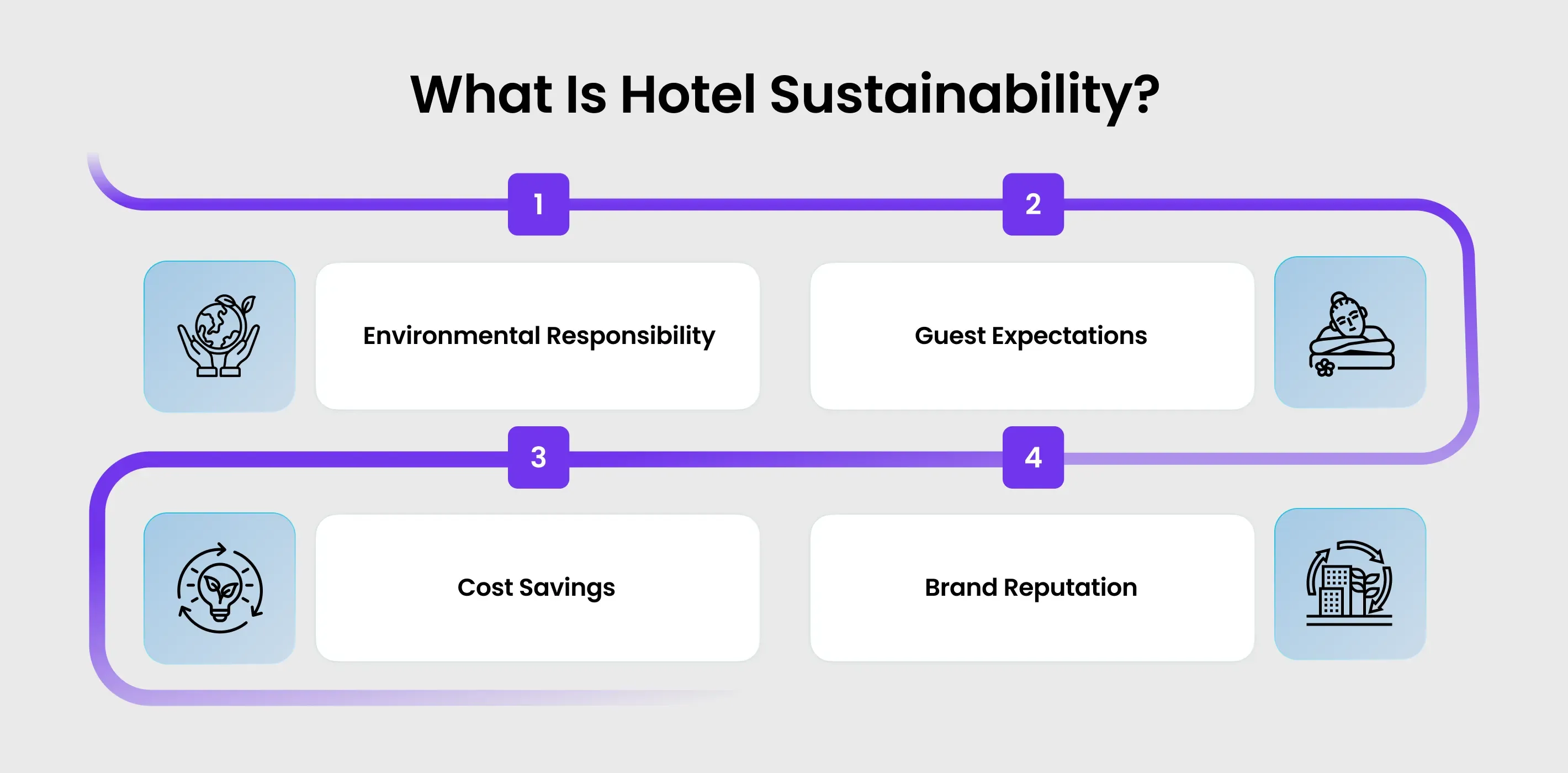
Why does sustainability matter?
1. Environmental Responsibility
The hospitality industry is badly reputed for high energy and water usage, food waste, and significant carbon footprints.
2. Guest Expectations
A whopping 70% of travelers say they prefer sustainable accommodations. (And yes, they do notice the details.)
3. Cost Savings
Energy-efficient practices and waste reduction aren't just good for the Earth; they're great for your bottom line.
4. Brand Reputation
Sustainability isn't just a PR stunt; it's a serious brand value. Guests are more loyal to businesses that align with their values.
Greenwashing is when hotels market themselves as eco-friendly without actually making significant changes.
Think: slapping a "green" sticker on the website because you replaced plastic straws. Guests can see through it, and they won't be kind about it on TripAdvisor.
Instead, focus on authentic efforts that create measurable impact. Transparency wins every time.
Here's what you can do.
Energy use is one of the biggest contributors to a hotel's carbon footprint. Luckily, reducing energy doesn't mean guests have to sit in the dark.
You can try these:
You can even combine ideas to kill two rubbiets with a single hit. For example, some hotels are installing rooftop gardens and solar panels. They get to grow fresh herbs while harvesting energy. It's the ultimate two-for-one.
Hotels are water guzzlers. Endless laundry, pools, and irrigation running 24/7 365. But cutting back doesn't mean guests have to forget long showers (though you can gently encourage it).
These are a few water-saving strategies:
Fun Fact: Switching to low-flow fixtures alone can cut water use by up to 30%.
Hotels produce mountains of waste from food scraps to single-use toiletries. The good news? A lot of it is avoidable.
Waste reduction ideas:
Also, guests love quirky sustainability initiatives. One hotel made headlines for turning food scraps into compost used in their rooftop garden. The cucumbers served at dinner? Grown from yesterday's leftovers.
Being sustainable isn't just about what you save, it's about where you spend. Start supporting local farmers, artisans, and suppliers to reduce carbon emissions from shipping and strengthen community ties.
Ways to start local sourcing:
Guests love feeling like they're part of the community, even if they're just here for the weekend.
Sustainability shouldn't be hidden behind the scenes. Guests want to feel part of the process without feeling guilt-tripped.
Involve guests in the sustainability processes:
And remember: Guests love to share unique experiences on social media. An "eco-friendly cooking class" or "solar-powered rooftop yoga" could be your next viral hit.

Yes, because you save both the planet and your money.
Here are all the benefits you harvest by making the shift to hotel sustainability.
Lower Operating Costs: Energy-efficient systems and water-saving fixtures reduce utility bills by up to 40%.
Increased Bookings: Eco-conscious travelers actively seek out sustainable hotels. It's a major booking factor for Millennials and Gen Z.
Positive Public Relations: Green initiatives make for great press. And today, reviews are everything. Good PR equals more bookings.
Employee Satisfaction: Teams love working for companies that align with their values. Sustainable practices can boost morale and retention.
Regulatory Compliance: Governments are imposing eco-regulations on businesses. Staying ahead of the curve avoids fines and builds goodwill for your hotel.
You don't need to be the Tesla of hotels. Start small to grow steadily.
Let's take it in a few steps.
Step 1. Conduct an Energy and Water Audit
Know where your biggest resource drains are and tackle them first.
Step 2: Set Clear Sustainability Goals
Whether it's reducing energy use by 20% or achieving a green certification, measurable goals keep you accountable.
Step 3: Invest in Employee Training
Staff are your frontline sustainability ambassadors. Get them on board with regular workshops and incentives.
Step 4: Start with Low-Cost Changes
Swapping bulbs and reducing water waste is inexpensive but impactful.
Step 5: Use Tech for Efficiency
Smart meters, automated lighting, and app-based waste management systems can make your hotel more efficient overnight.
Step 6: Always Gather Guest Feedback
Add sustainability questions to post-stay surveys. Guests often have brilliant ideas-they just need to be asked.
Now, smart hotel tech isn't only for fast check-ins. It can be used for sustainability, too. In fact, technology is one of the most powerful tools in your sustainability toolkit.
From reducing energy consumption to optimizing waste management, the right tech can make a world of difference.
Here are the best examples:
Sustainability isn't just a trend. With it, your hotel might just become the talk of the town… for all the right reasons.
And remember:
So let's make sustainability more than just a buzzword. Let's make it your hotel's new superpower. And if you ever need a reminder…
Saving the planet looks great on you.

Content Manager
Anush Sargsyan is a content manager specializing in B2B content about OTT streaming technologies and digital media innovation. She creates informative, engaging content on video delivery, OTT monetization, and modern media technologies. The goal is to help readers easily understand complex ideas. Her writing is the bridge between technical detail and practical insight, making advanced concepts accessible for both industry professionals and general audiences.