
March 12, 2026
"Think outside the trash can, sustainability starts with smart choices."
With hospitality evolving rapidly, sustainability has evolved from a buzzword to a business imperative. Hotel managers play a critical role in implementing effective waste management strategies that not only reduce environmental impact but also improve operational efficiency and enhance guest satisfaction.
This comprehensive guide explores the significance of hotel waste management, identifies common sources of waste, and offers actionable strategies to create a more sustainable hospitality environment.
Hotels generate substantial amounts of waste daily, from food scraps and single-use plastics to hazardous materials like cleaning agents and batteries. Implementing robust waste management strategies is crucial for several reasons:
Proper waste management significantly reduces landfill contributions, directly lowering the hotel's ecological footprint.
Adhering to local and international waste disposal regulations helps avoid legal penalties and reinforces the hotel's commitment to sustainability.
Streamlined waste processes lead to reduced disposal costs and promote efficient use of resources.
Modern travelers prefer environmentally responsible hotels. Implementing sustainable practices not only improves brand image but also boosts guest loyalty.
Effective waste management is crucial as it helps reduce operational costs by minimizing disposal fees and improving resource efficiency. Poor waste management can also lead to reputational damage, as modern travelers increasingly prefer eco-conscious accommodations. Additionally, non-compliance with local and international waste regulations can result in significant regulatory fines. For that reason, effective hotel waste management isn't just a sustainability initiative - it's a smart business strategy. By optimizing waste practices, hotels can reduce costs, enhance brand image, and contribute positively to environmental conservation.
Overview of waste accumulation within the hotel sector in USA:
Hotels generate approximately 289,700 tons of waste annually.
Hotels account for about 9% of the total food waste in the hospitality and food service industry. In the United States, it's estimated that 40% of food waste occurs in consumer-facing businesses like hotels, resulting in approximately $35 billion in waste from catering and banquets annually.
The hospitality industry produces significant plastic waste, with a substantial portion stemming from single-use items such as toiletry bottles. In response, legislation in places like New York State has banned single-use plastic toiletry bottles in hotels to combat this issue.
This data highlights the significant waste footprint of the U.S. hotel industry alone, emphasizing the need for improved waste management practices domestically. Globally, the figure would be substantially higher, considering the scale of the hospitality industry worldwide.
Understanding the main sources of waste is the first step toward effective management. In the hospitality sector, the most significant contributors include:
Excess food from buffets, overproduction, and plate waste represent a major portion of hotel waste streams. Studies show that food waste can account for up to 50% of a hotel's total waste.
Items like toiletries, water bottles, and food packaging generate substantial plastic waste. A typical 200-room, 4-star hotel can produce over 300,000 pieces of single-use plastics per month.
Deliveries often come with excessive packaging, increasing the overall waste volume.
Disposable items such as slippers, brochures, and single-use toiletries add to the hotel's waste footprint.
Brochures, newspapers, receipts, and administrative documents.
Beverage bottles, cans, and cooking equipment.
Cleaning chemicals, batteries, and electronic waste.
Worn-out linens, uniforms, and towels.
Identifying these waste streams is the first step toward developing an effective hotel waste management plan.
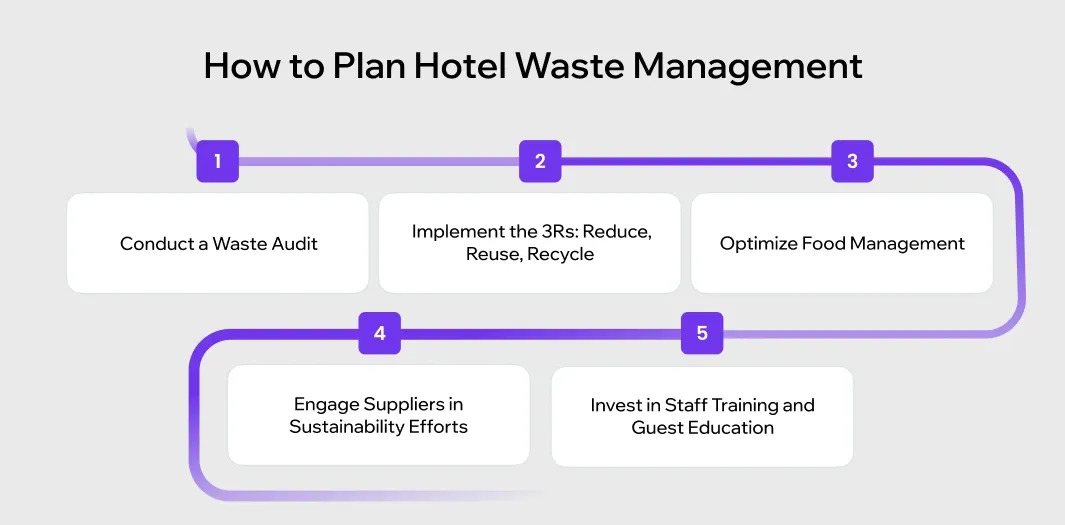
Begin by analyzing the types and amounts of waste generated. A thorough waste audit helps identify key problem areas and track improvements over time.
Work closely with suppliers to:
Hotels can implement a variety of strategies to reduce waste, minimize environmental impact, and optimize operational efficiency:
Food waste is one of the largest waste streams in hotels, and tackling it requires targeted strategies:
Adopting effective hotel waste management strategies is more than an environmental responsibility; it's a smart business decision. Hotels that embrace sustainable practices can reduce operational costs, comply with regulations, attract eco-conscious travelers, and contribute positively to environmental conservation.
With growing global concerns about climate change and resource conservation, sustainable waste management is essential. Forward-thinking hotels that prioritize waste reduction not only protect the environment but also position themselves as leaders in hospitality excellence.

Product Owner
Andranik is a Product Owner specializing in OTT, IPTV, and FAST technologies at inoRain. He leads the development of scalable, end-to-end streaming solutions that enhance video delivery and monetization. His work bridges technical innovation with real business impact, helping platforms and the hospitality sector optimize performance, user experience, and operational efficiency.