August 20, 2026
Four people in line at 3 p.m. An agent tabbing between a booking screen, a spreadsheet, and a card terminal to finish one arrival. A bar tab from last night that never made it onto the folio. None of that is a staffing problem. It is a systems problem, and it is costing you review scores and revenue you will never see on a report.
The best hotel front desk software collapses those screens into one workflow, so checking a guest in takes a minute instead of five. Choosing it is the hard part, because the labels overlap and every vendor claims the same ground. This guide covers 10 platforms worth shortlisting in 2026, what they really cost, and how to pick.
Three terms get used interchangeably here, and the confusion is expensive. Sort them out first.
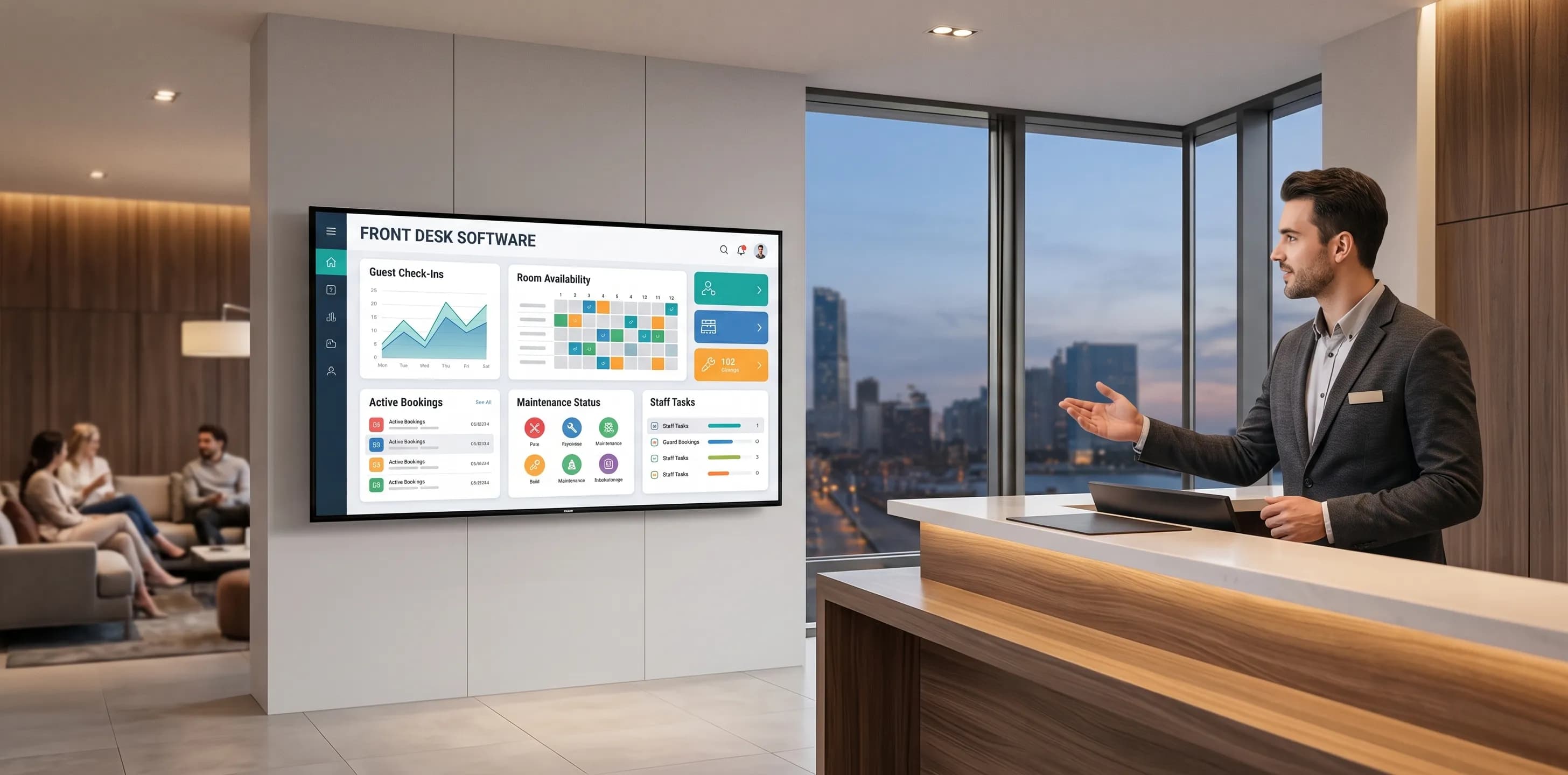
Front desk software is the workstation your agents live in from arrival to departure. It handles the moment a guest walks in, the moment they leave, and everything charged in between.
A property management system (PMS) is the wider operational system the desk sits inside. It adds housekeeping, night audit, rate management, and reporting across the whole property.
Hotel management software is the umbrella label. It covers the PMS plus the things bolted around it, including revenue management, F&B, and business intelligence.
In practice, almost no vendor sells a standalone front desk product. What you buy is a PMS, and the arrivals screen is its front desk module. That is why searches for hotel front office software and front desk management software return the same short list of platforms. The distinction still matters, because it tells you what to test in a demo. If your pain is at the desk, judge the product on the desk.
Whatever the label, a capable system handles this set of jobs:
A 20-room inn that needs to stop overselling has very different requirements from a 130-room independent running a restaurant and a spa. Get the layer right and your shortlist narrows fast.
The pressure on your desk is not going to ease. More than half of hotels surveyed in early 2026 reported being somewhat or severely understaffed, and properties are paying to fix it, with 70% offering higher wages and 54% offering flexible scheduling, according to the American Hotel & Lodging Association. When you cannot add headcount, the only lever left is giving the people you have a system that does more of the work.
That lever is measurable. In a study of 450 hotel professionals, 89% said their property management system saves their team between two and more than ten hours a week, and 17% put the figure above ten hours. At the top of that range you are recovering roughly 500 hours a year, which is most of a full-time position handed back to your operation.
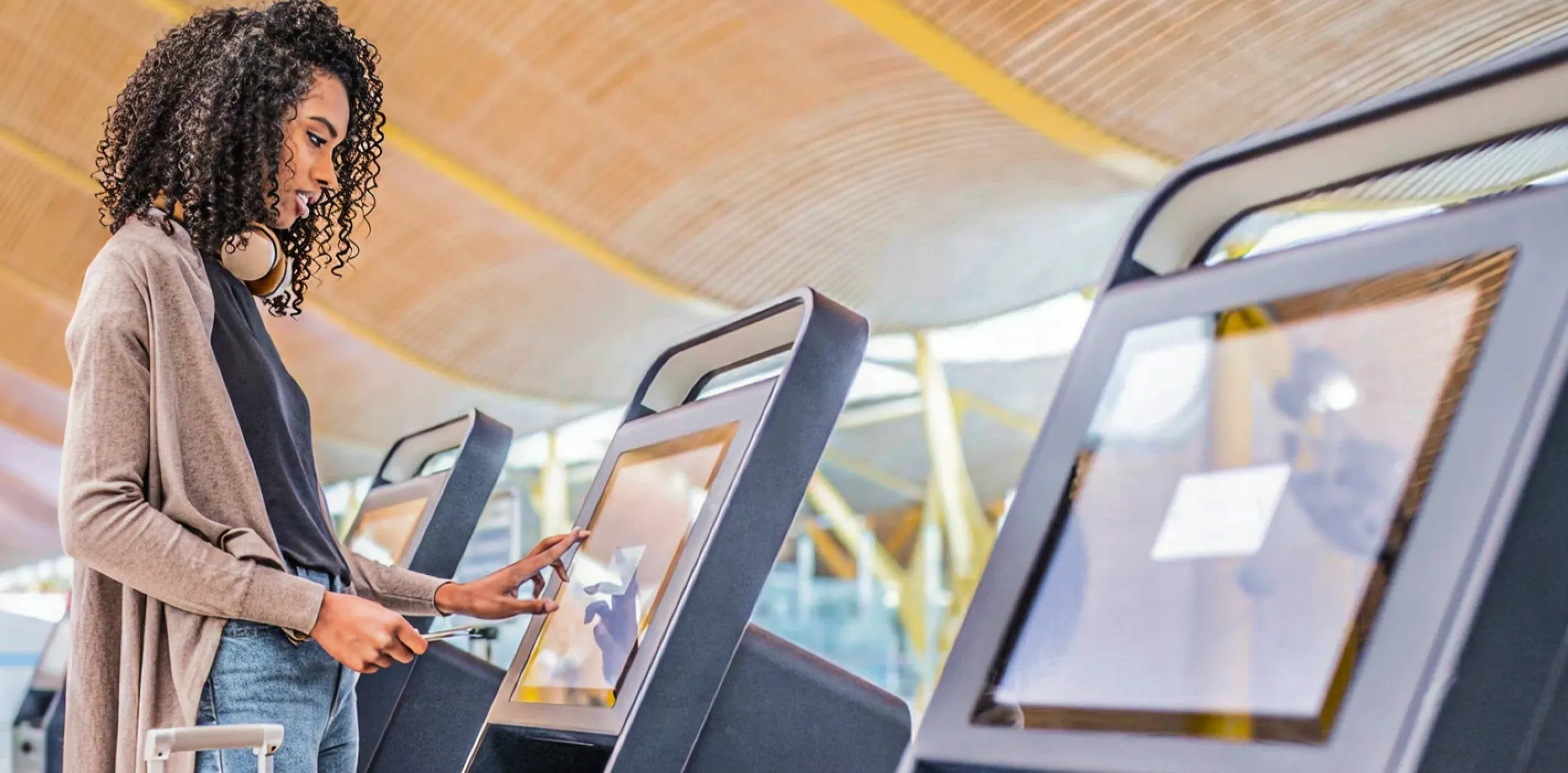
Your guests are pushing from the other side. Research published in March 2026 found that 43% of luxury guests expect not to wait in line at all, and close to half would rather check out on their own phone than at the desk. A modern hotel front desk system does not remove your team from the arrival. It removes the queue, so the conversation your agent has is a welcome rather than an apology.
No roundup on this topic shows its working, so here is ours. We weighed:
We scoped this to platforms built for hotels rather than vacation rentals. Here are 10 worth shortlisting.
| Platform | Best for | Standout strength |
|---|---|---|
| Cloudbeds | Independent hotels and hostels | All-in-one PMS, booking engine, and channel manager |
| Mews | Design-forward independents and groups | Self-service check-in and a deep app marketplace |
| Oracle OPERA Cloud | Large hotels, resorts, and branded properties | Enterprise depth and brand-standard compliance |
| Stayntouch | Select-service and lifestyle hotels | Mobile-first front desk your team runs from a tablet |
| WebRezPro | Mixed and unusual inventory | Flexible cloud PMS across property types |
| Little Hotelier | Small properties and B&Bs | Simple toolkit built for owner-operators |
| RoomRaccoon | Boutique hotels | Automation of payments, upsells, and admin |
| Hotelogix | Multi-property independents | Multi-property dashboard at an accessible price |
| Maestro PMS | Independent full-service hotels and resorts | Deployment choice and long-tenure support |
| innRoad | US independent hotels | All-in-one with hands-on onboarding |
Cloudbeds bundles a PMS, booking engine, and channel manager into one login, which is why it appears on so many independent shortlists. The front desk view is built for a small team covering several jobs at once.
Mews is a modern cloud PMS with a clean front desk interface and strong self-service tooling, including kiosk and online check-in. It suits properties moving routine arrivals away from the desk without losing the welcome.
OPERA Cloud is the enterprise standard here, and for larger or branded properties it is often not optional. It brings depth in reporting, multi-property control, and brand-standard compliance that smaller platforms do not attempt.
Stayntouch built its reputation on a mobile-first front desk your team runs from a tablet in the lobby rather than from behind a counter. A natural fit where the arrival itself is part of the brand.
WebRezPro is a flexible cloud PMS that handles a wide spread of property types, from inns and lodges to larger independents with mixed inventory. Useful when your room types do not fit a template.
Little Hotelier is purpose-built for small properties, pairing a simple front desk with a booking engine and channel manager. It is aimed at the owner who is also the receptionist on Sundays.
RoomRaccoon automates the admin around the desk, including payments, invoicing, and upsells. For a boutique property with a lean team, that is often worth more than extra features.
Hotelogix is a cloud PMS for small and mid-size independents, with multi-property support that is unusual at its price point. A practical option if you run more than one site and cannot justify enterprise licensing.
Maestro has served independent full-service hotels and resorts for decades and still offers a choice of cloud, private cloud, or on-premise deployment. That matters if your connectivity or ownership structure rules out pure cloud.
innRoad is an all-in-one platform popular with US independents, pairing the front desk, booking engine, and channel management with onboarding that stays hands-on past go-live.
Every vendor on this list says "contact for pricing," which makes budgeting hard. What you can do is learn the four models, so you know what you are being quoted.
Then there are the costs that never appear on the first quote: implementation and data migration, staff training, payment processing markup, per-integration fees, and the contract term itself. Ask for a three-year total, not a monthly rate. That is the number that tells you whether this front desk software for hotel operations of your size actually pencils out.
A front desk system that does not talk to your other tools just moves the manual work somewhere else. The commercial gap is stark: hotels running an integrated technology stack grew revenue by 24% while properties without one declined by 28%, according to Revinate's 2026 benchmark research. The same study found only 11% of guest profiles in North America and 8% in EMEA are complete, and both figures fell year over year. Every incomplete profile is a guest you cannot recognize next time.
Before you commit, confirm the platform connects cleanly to:
Ask for a current, live integration list with named partners. A roadmap is not an integration. And remember that a front desk hotel reservation software choice shapes everything downstream, because most other systems in your building read from it.
Work through these steps in order before you sign anything.
Once your desk is chosen and your arrivals are running cleanly, the question changes. It stops being about the check-in and starts being about what the guest finds when they open their door.
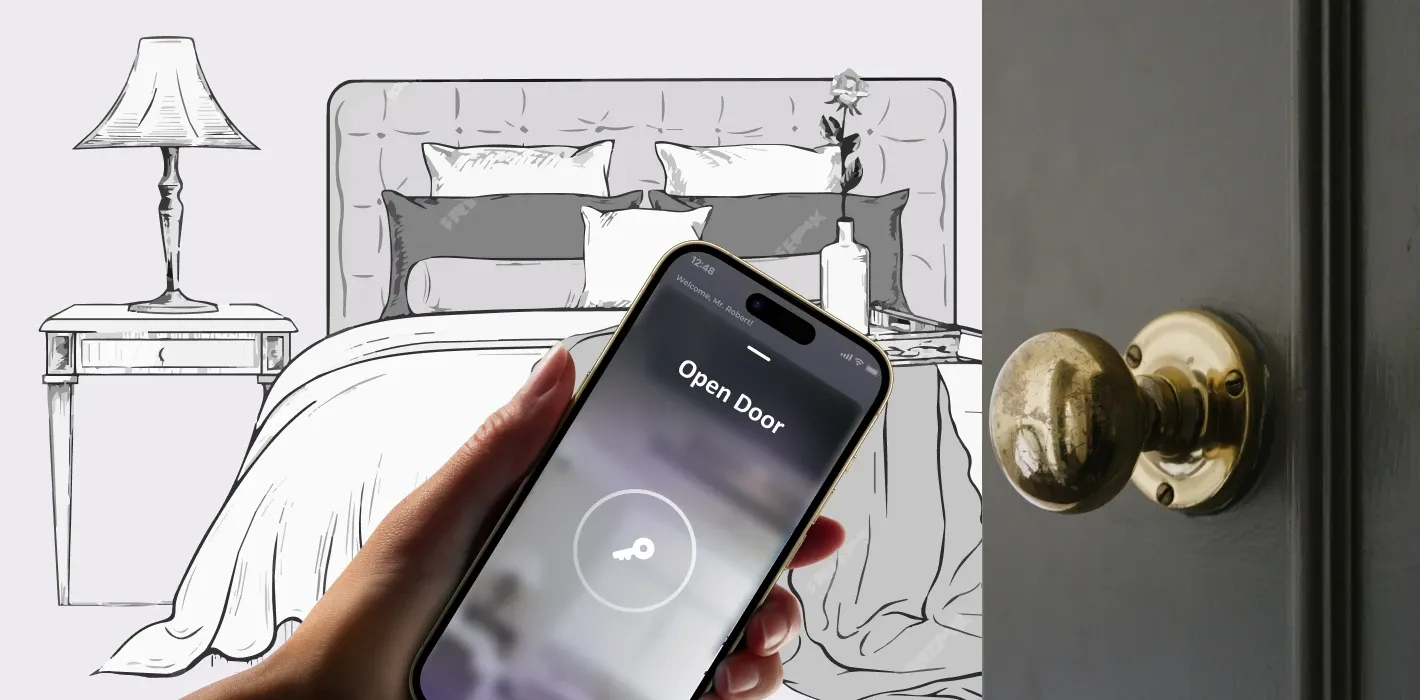
That is the layer we work in. A guest app moves requests and service bookings onto the guest's own phone, which quietly takes a share of routine traffic off your desk phone. Hotel interactive TV gives them a branded screen for entertainment and property information instead of a channel list from 2011. And a properly managed hotel WiFi network answers the single most common question any front desk agent hears, before it gets asked.
None of this replaces your front desk system. It picks up where the front desk hands over the key.
Working out what the guest-experience layer on top of your new front desk system should look like? Get in touch with us and we will help you map it out.
The right front desk system is the one that matches your property size, your real three-year cost, and the tools you already depend on. Pilot it with your own rates and your own team before you commit. Once arrivals are running smoothly, the next question is what the guest experiences on the other side of that key handover. If that is where your thinking is heading, get in touch with us.

Product Manager
Leads smart hotel tech products. Focused on interactive TV and PMS integrations. Turns guest needs into simple, effective solutions. Loves building products that improve hotel operations and enhance guest experience.