February 25, 2026
For hoteliers, balancing security, cost-efficiency, and guest experience is no easy task. One critical area often overlooked is hotel room access. Guests expect seamless check-ins and keyless convenience, yet hotel operators must ensure security while keeping operational costs low. Enter the hotel key card.
Still, with so many technologies available - magnetic stripe, RFID, NFC, and mobile keys - hoteliers may struggle to determine which system best suits their property. Each option comes with distinct advantages and challenges, from security vulnerabilities to operational costs and guest convenience.
This article explores hotel key card systems in detail, covering how they work, the different types available, their benefits, and the emerging trends in in-room access technology. Whether you manage a boutique hotel, a large resort, or a business-oriented property, understanding these technologies will help you make informed decisions to enhance security and guest satisfaction.
A hotel key card is a digital room access device that replaces traditional metal keys. It’s typically designed to be the size of a credit card and is programmed to grant entry to designated rooms and other secure areas within a hotel.
Depending on the technology used, hotel key cards may function through magnetic stripes, RFID chips, or NFC communication.
Guests receive a key card upon check-in, which is programmed with their room number and the duration of their stay. When they hold, tap, swipe, or insert the card into a door lock, the system authenticates the credentials and grants access. Key cards can also be deactivated remotely when lost or stolen to prevent financial loss and security risks.
Beyond room entry, many hotels program key cards to serve multiple functions. Some properties use them to access fitness centers, private lounges, and parking garages. Others integrate key cards with point-of-sale systems, allowing guests to charge spa treatments, meals, and other purchases directly to their room.
Hotel key cards come in various formats, each offering different levels of security, convenience, and durability. The right choice depends on the hotel’s size, budget, and guest expectations.
One of the earliest types of hotel key cards, magnetic stripe cards are cost-effective and easy to use. They store guest data on a black magnetic strip, which must be swiped through a card reader to unlock the hotel room door.
However, these cards have several downsides. They are prone to demagnetization, which can render them useless if stored near a phone or credit card. Additionally, they offer lower levels of security since they can be easily cloned using simple tools.
Best for: Budget hotels and small properties that prioritize cost.
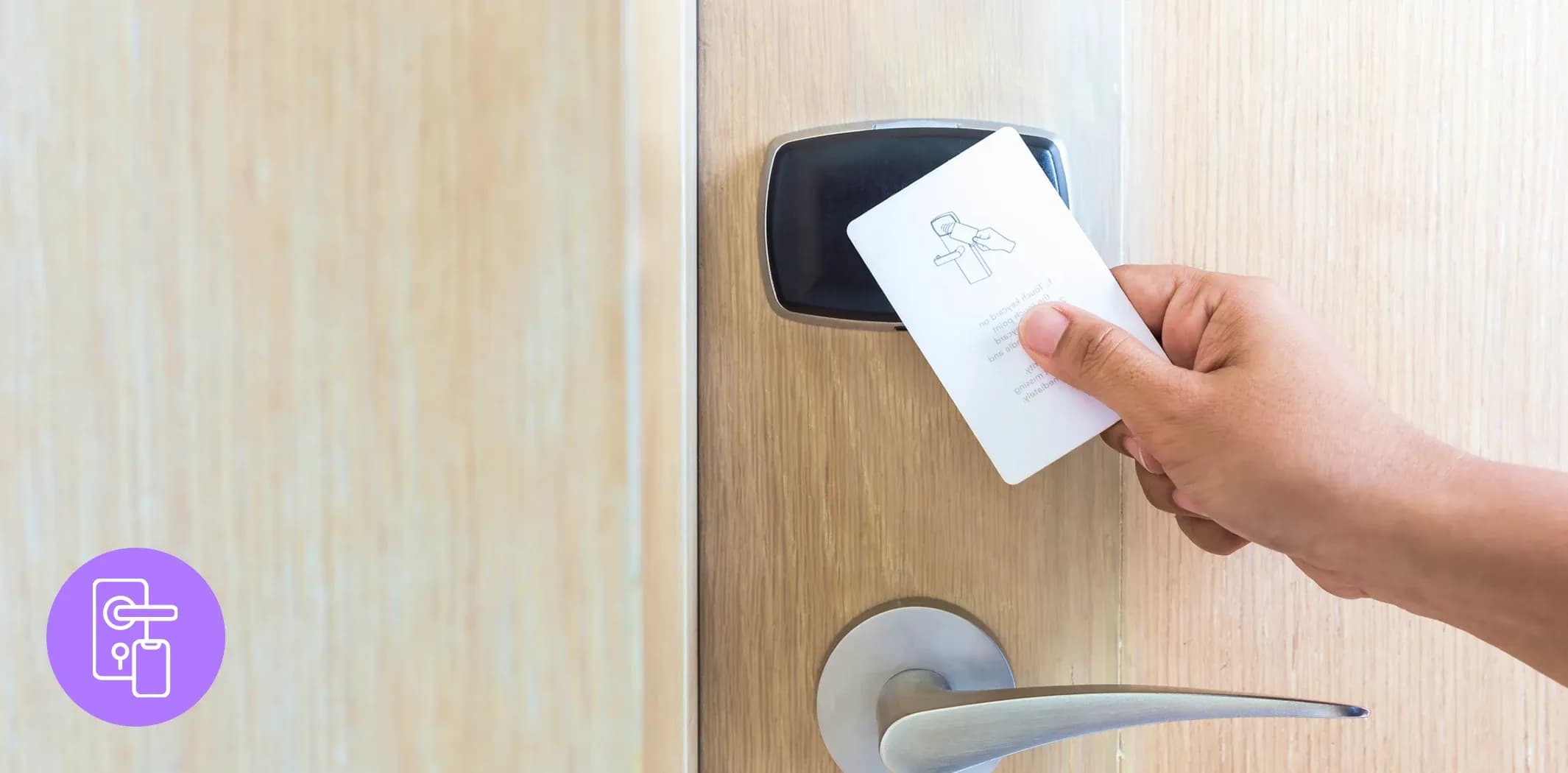
Radio-frequency identification (RFID) doesn’t require physical contact with the reader, making it more durable and more secure than magnetic stripe cards. Instead of swiping, guests simply tap their card on the door sensor for access.
RFID cards are resistant to wear and demagnetization, which reduces the chances of malfunction. They also provide higher encryption levels, making them difficult to duplicate. Additionally, hotels can program these keys to grant access to multiple areas, such as gyms, spas, and business lounges.
Best for: Mid-range to high-end hotels looking for enhanced security, durability, and ease of use.
Near-field communication (NFC) works similarly to RFID, but with an added capability - NFC cards communicate both ways with devices, allowing additional features such as mobile key solutions.
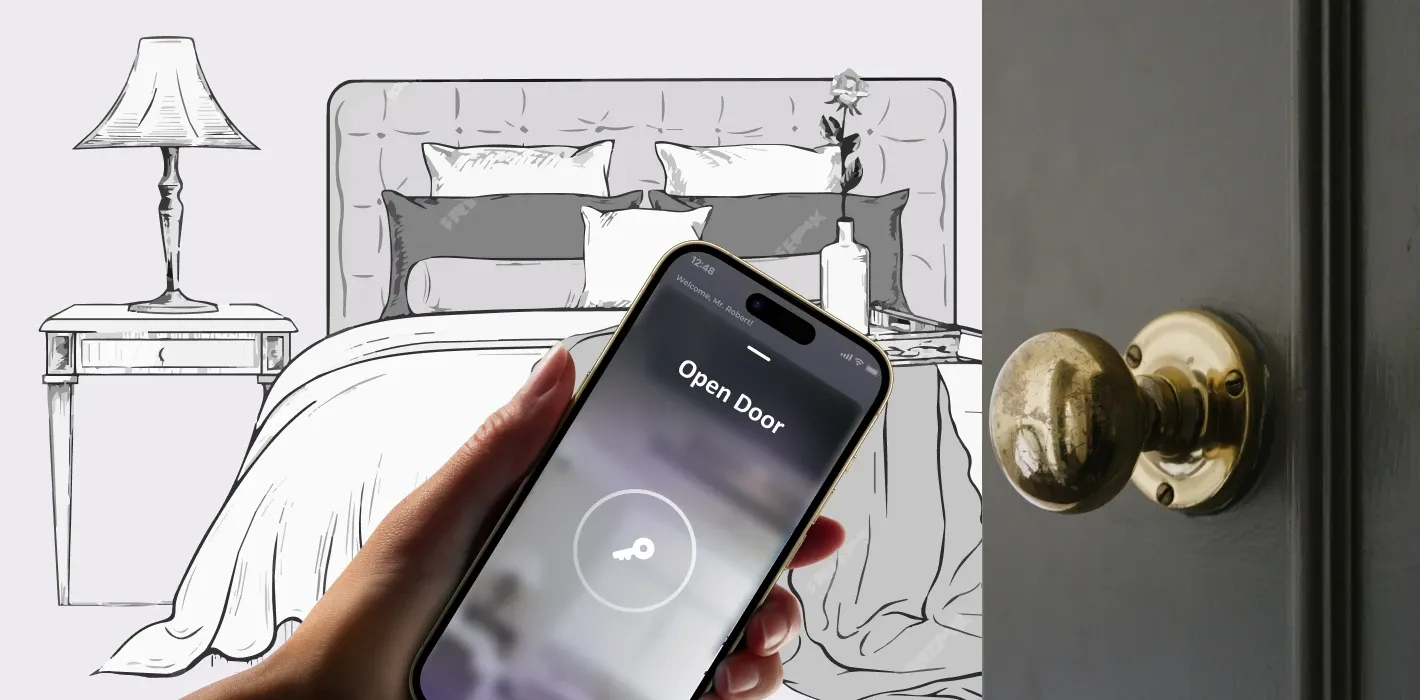
Hotels adopting smartphone-based keyless entry systems use NFC-enabled technology, allowing guests to access their rooms using their phones instead of a physical key card. This eliminates the need for plastic key cards altogether.
Best for: Tech-forward hotels, large chains, and smart hotels investing in fully digital guest experiences.
With growing advancements, some hotels are incorporating biometric authentication into their access control systems. These systems use fingerprint scanning, facial recognition, or retina scans to allow guests into their rooms. While still emerging, biometric access presents a high-security alternative to traditional hotel key cards.
Best for: Luxury hotels looking to incorporate cutting-edge security into their smart hotel rooms.
Regardless of the card type, the fundamental process of how hotel key cards work remains the same:
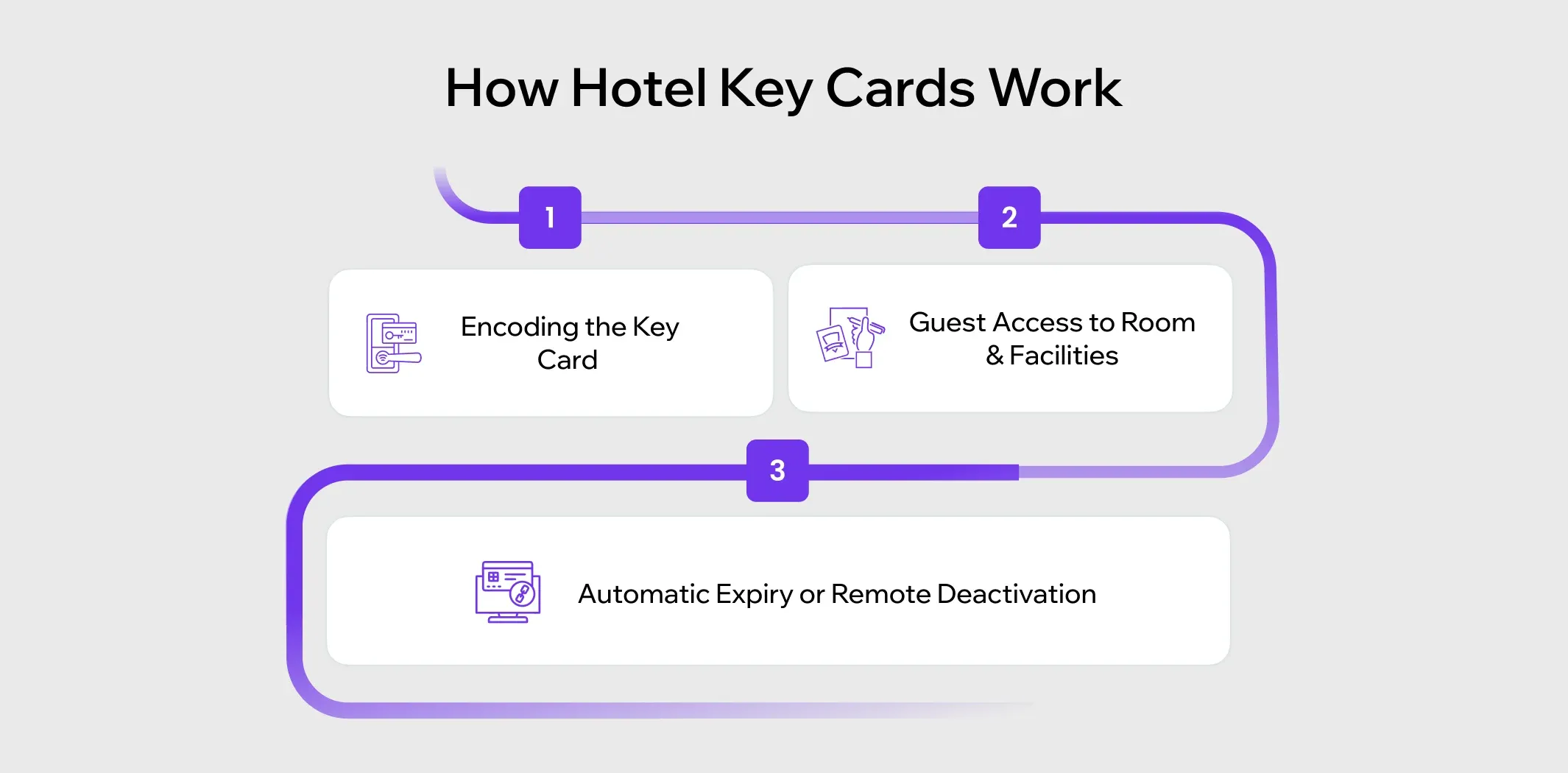
When a guest checks in, the hotel’s Property Management System (PMS) encodes the key card with the guest’s room number, check-in, and check-out dates.
Using the key card, the guest can unlock their room or other permitted areas, such as the spa, parking lot, or elevators. RFID and NFC cards also allow for tap-and-go access, making the process frictionless.
Upon checkout, the key card is automatically deactivated, ensuring it no longer grants access to the room. If a hotel uses mobile or smart keyless technology, access can even be restricted based on geolocation or automatic room assignment changes.
Implementing a hotel key card system provides a wide range of advantages, from enhancing security and reducing costs to improving operational efficiency and elevating the guest experience.
Security is one of the most significant advantages of hotel key cards. Unlike traditional metal keys, which can be easily copied, lost indefinitely, or transferred between unauthorized individuals, hotel key cards significantly reduce these risks.
RFID and NFC hotel key cards are encrypted and uniquely coded, making them much harder to duplicate. This ensures that only authorized guests and staff can access assigned areas. Additionally, hotels can set time-based access restrictions so that key cards automatically expire at checkout, preventing unauthorized extended stays.
Another major security benefit is the ability to remotely deactivate lost or stolen key cards. If a guest loses their key card or reports a theft, the hotel can immediately invalidate the old card and reissue a new one without changing the locks.
With magnetic stripe or RFID key cards, contactless check-in becomes seamless, as front desk staff can program a guest’s key card within seconds. This reduces congestion at reception, improves staff productivity, and allows team members to focus on high-value guest interactions instead of troubleshooting lost or misplaced keys.
Key card technology solutions go beyond simple room access. They can be used to grant guests entry to premium hotel amenities, such as spas, lounges, fitness centers, and private areas, eliminating the need for separate key systems for different facilities. Some hotels even use hotel operations platforms integrated with key cards for in-hotel purchases, allowing guests to charge meals, activities, and spa treatments directly to their rooms.
For housekeeping and maintenance teams, key cards streamline room access and management. Smart access systems allow staff to enter rooms based on their assigned cleaning schedule, and managers can control which employees have access to specific areas at predetermined times, reducing unauthorized entry.
Modern key card technology eliminates rekeying costs. If a key card is lost or damaged, replacing it costs only a fraction of what it would take to replace a traditional key system, and the process is instant. Instead of physically changing door locks, staff can deactivate the missing key card and issue a new one, saving both time and money.
A frictionless check-in experience plays a critical role in overall guest satisfaction. Long waits at the front desk due to manual key assignments or misplaced keys can result in negative first impressions, particularly for business travelers or luxury-seeking guests demanding a higher level of efficiency. By offering RFID or NFC hotel key cards, hotels significantly reduce check-in bottlenecks, allowing guests to gain quick access to their rooms.
For hotels that want to enhance guest personalization, smart key cards can be paired with guest preference data and loyalty programs. Returning guests can receive pre-programmed access to their preferred floor, suite upgrades, or fast-tracked check-in, creating a more tailored and memorable stay experience.
For multi-property operators or expanding hotel brands, scalability is a major advantage of hotel key card systems. Whether managing a boutique hotel or a large resort chain, these systems can be centrally managed and expanded as needed.
Larger hotel chains can even implement cloud-based security and access control, allowing centralized teams to monitor guest access across multiple locations. This enhances internal security protocols, access tracking, and property oversight, all while providing a consistent experience across all brand locations.
The hotel industry is under increasing pressure to reduce waste and adopt sustainable practices. Traditional metal keys require additional energy for locksmithing and rekeying, while plastic magnetic stripe cards contribute to landfill waste when disposed of improperly. In contrast, the latest advancements in eco-friendly hotel key cards provide biodegradable options, including wooden key cards, bamboo cards, and recycled plastic alternatives.
As hotels move toward fully digital ecosystems, the way guests access their rooms and hotel amenities is expected to become more intelligent, flexible, and secure than ever before.
One of the most significant developments in key card technology is the rapid adoption of mobile keys. Major hotel chains such as Hilton, Marriott, and Hyatt are already integrating digital key access into their mobile apps, enabling guests to check in remotely, access their rooms with a tap, and upgrade amenities without visiting the front desk.
These digital keys are stored within hotel apps or smartphone wallets (such as Apple Wallet and Google Wallet), ensuring that only the registered guest with an authenticated device can gain access.
Mobile keys are not yet a full replacement for physical key cards, as hotels must still accommodate guests without smartphones or those who prefer an alternative option. As a result, the future will likely see a hybrid approach where digital and physical solutions coexist, giving guests greater control over their check-in experience.
While mobile keys have become the standard for digital-first hospitality brands, biometric authentication is emerging as an even more secure and frictionless room access technology.
Luxury hotels and high-end resorts are beginning to implement fingerprint scanning, facial recognition, and retina scanning access control systems to enhance security and further eliminate the need for traditional keys or mobile devices altogether. Hotels in Japan, China, and select locations in the U.S. are already adopting biometric check-in kiosks combined with facial recognition room access.
Despite its advantages, biometric technology comes with privacy concerns and regulatory compliance challenges. Many guests may be hesitant to share their facial or fingerprint data, raising questions about how hotels store and manage biometric information. To address this, leading hotel brands are implementing strict security protocols and encryption, ensuring compliance with privacy laws before expanding biometric access globally.
Traditional plastic key cards have been a major environmental burden, with millions of discarded cards contributing to global plastic waste each year. As an alternative, many hotels are transitioning to eco-friendly key cards made from bamboo, wood, or recycled plastic.
Leading hotels have already made progress in adopting sustainable access solutions:
1 Hotels and Mandarin Oriental have introduced wooden RFID key cards, reducing plastic consumption.
Fairmont Hotels & Resorts has eliminated single-use plastic key cards completely by shifting to mobile keys and wooden alternatives.
Luxury eco-resorts are exploring paper-based RFID key cards, which are fully compostable and aligned with sustainable travel initiatives.
For many hotels, removing physical key cards altogether is the next step, with mobile apps playing a critical role in reducing the reliance on disposable materials. By eliminating the need for key card printing, hotels not only save money but also reduce their carbon footprint.
As hotels embrace AI-driven smart room technology, hotel key cards will become more than just room access tools—they will act as the gateway to a fully personalized guest experience.
In future smart hotels, digital room keys will be:
Integrated with voice-controlled assistants like Alexa or Google Assistant, allowing guests to use voice commands to unlock their doors.
Connected to AI-powered guest profiles, which automatically adjust room features based on past preferences.
Linked with hotel IoT ecosystems, enabling guests to access all smart amenities (lighting, thermostat, in-room entertainment) from the same platform as their digital key.
HotelSmarters is at the forefront of this transformation, offering advanced middleware, in-room technology, and hotel operations solutions that integrate AI-driven access control, IoT connectivity, and smart room automation.
Through HotelSmarters, hotels can enable frictionless check-ins, smart in-room controls, and real-time guest service personalization, ensuring a seamless and modern hospitality experience.
As AI-driven access technology continues to advance, hotels that adopt smart key solutions will gain a competitive edge, offering guests a secure, convenient, and highly personalized stay.
Hotel key cards play a crucial role in ensuring secure and efficient room access. Whether a hotel opts for traditional magnetic stripe cards, durable RFID cards, or cutting-edge NFC and mobile key technology, the right key card system can improve security, streamline operations, and enhance the overall guest experience.
With innovations such as keyless entry via mobile phones and biometric authentication on the horizon, hoteliers who embrace new access technologies will position themselves as industry leaders. The best approach is to evaluate the specific needs of the hotel and choose a system that meets security requirements, budget constraints, and guest expectations.
HotelSmarters provides cutting-edge keyless entry solutions, integrating seamlessly with room controls, mobile key technology, and hotel operations ecosystems. Get in touch with our experts to explore how HotelSmarters can enhance your hotel's access control and guest experience.

Product Manager
Leads smart hotel tech products. Focused on interactive TV and PMS integrations. Turns guest needs into simple, effective solutions. Loves building products that improve hotel operations and enhance guest experience.