February 23, 2026
Technology has become inextricably fused into our daily lives in recent years, and the hotel industry wants to keep pace. One of the most interesting developments in this space is the emergence of hotel eCommerce. The digital revolution has transformed how hotels operate, market, and sell their services, making online sales strategies more crucial than ever.
Hotel eCommerce is no longer just a buzzword but rather a powerful tool to stay ahead amidst hefty competition. But what exactly is hotel eCommerce, and how can modern hotels harness its potential?
This in-depth guide breaks down everything you need to know, from essential components and key benefits to future trends shaping the industry.
Hotel eCommerce refers to the process of selling hotel rooms, amenities, and services online.
Gone are days when travelers relied on phone calls or walk-ins to secure a room. By 2029, it’s expected that over 80% of bookings will be done online, according to industry reports. For hoteliers, this shift means that having a robust eCommerce strategy isn’t just an option - it’s a necessity.
Think of hotel eCommerce as the hospitality industry’s version of online shopping - instead of purchasing clothes or electronics, travelers can book stays, reserve dining experiences, or purchase spa packages with just a few clicks. The scope encompasses everything from a hotel’s website and online travel agencies (OTAs) to social media platforms and mobile apps.
The shift from traditional hotel sales to hotel eCommerce has improved how hotels attract and serve guests. While older methods relied on manual bookings and limited reach, modern digital strategies offer automation, global accessibility, and personalized experiences. The table below highlights the key differences:
| Aspect | Traditional Hotel Sales | Modern Hotel eCommerce |
|---|---|---|
| Booking Process | Phone calls, walk-ins, travel agents | Direct online booking via websites, OTAs, and apps |
| Reach | Limited to local or agency-driven traffic | Global reach through digital marketing and multiple platforms |
| Pricing Strategy | Fixed rates with manual adjustments | Dynamic pricing based on demand and guest behavior |
| Guest Experience | Manual check-in, limited personalization | Self-check-in, keyless entry, digital concierge, loyalty programs |
| Revenue Management | Dependent on seasonal trends and fixed pricing | AI-driven pricing optimization for maximum profitability |
To succeed in the digital marketplace, hoteliers must understand the essential building blocks of hotel eCommerce. Here’s a breakdown of the key components:
Your website is your digital storefront if you want to keep your money in-house and don’t pay third-party platforms. It needs to be visually appealing, easy to navigate, and optimized for mobile devices. High-quality images, virtual tours, and clear calls to action (like “Book Now”) are critical for converting visitors into guests.
The booking engine is the backbone of hotel eCommerce. It should integrate seamlessly with your website, offering real-time availability, multiple payment options, and instant confirmations. A clunky or slow booking process can drive potential guests straight to your competitors.
From search engine optimization (SEO) to social media campaigns, digital marketing is the engine that drives traffic to your website. Paid ads, email marketing, and influencer partnerships can help you reach a broader audience and boost bookings.
While direct bookings are ideal, strategic OTA partnerships expand your reach and help target global travelers. Balancing OTA reliance with a strong direct booking strategy ensures higher profit margins while leveraging OTA visibility.
A CRM system helps hotels collect and analyze guest data, enabling personalized marketing and loyalty programs. By understanding guest preferences, hotels can tailor their offerings and foster long-term relationships.
Data is the lifeblood of hotel eCommerce. Analytics tools provide insights into booking trends, guest behavior, and marketing performance, allowing hoteliers to make informed decisions and optimize their strategies.
In an industry where first impressions are everything, hotel eCommerce has emerged as the silent powerhouse reshaping the future of hospitality. Picture this: A boutique hotel in Lisbon sees a 40% surge in bookings within months of revamping its website. A luxury resort in Bali slashes marketing costs by 30% while doubling direct reservations. These aren’t hypothetical scenarios - they’re real-world outcomes for hotels that have tapped into the transformative potential of eCommerce. And the benefits are game-changing, empowering hotels to take control of their revenue and guest experiences. Here are some of the top advantages of hotel eCommerce:
For years, online travel agencies (OTAs) dominated the booking landscape, charging hefty commissions and taking control of guest data. Hotel eCommerce flips the script by simply shifting the focus to direct bookings. An optimized booking engine empowers hoteliers to maximize financial margins, gain full control over pricing and promotions, and build better relationships with guests.
A strong digital presence doesn’t recognize geographical barriers, giving hotels direct access to international travelers. A boutique hotel in Santorini can attract honeymooners from Los Angeles, while a business hotel in Singapore can target corporate travelers from London thanks to strategic SEO campaigns, paid advertising, and social media engagement.
Today’s travelers expect more than just a comfortable stay - they want a curated experience. AI-driven hotel eCommerce platforms can analyze past guest behavior to offer personalized room upgrades, special discounts, or even a preferred bottle of wine waiting in their suite upon arrival. This level of customization not only elevates guest satisfaction but also increases revenue through upsells and repeat bookings.
Hotel eCommerce software leverages AI-driven pricing to adjust room rates dynamically based on demand, seasonality, and competitor pricing. Hoteliers can maximize profitability during peak and off-peak seasons and ensure competitive pricing while increasing average revenue per guest.
Every interaction on a hotel’s eCommerce platform provides valuable insights. Understanding which marketing campaigns drive bookings, what time of year sees the most conversions, and how guests navigate the website helps hotels refine their strategies. Data-driven decision-making leads to improved operations, better guest targeting, and ultimately, higher revenue.
If you spend any length of time in a hotel, you’ve no doubt noticed that there’s a new breed of hospitality: Digital convenience, seamless transactions, and hyper-personalized experiences. So it’s the sacred job of hoteliers to make a guest’s life easier when they’ve decided to book a room. That’s why simply having a website isn’t enough.
Hoteliers must embrace a full-scale eCommerce approach, blending smart technology, data-driven marketing, and direct booking optimization to attract and retain guests. Here’s how to create a winning strategy:
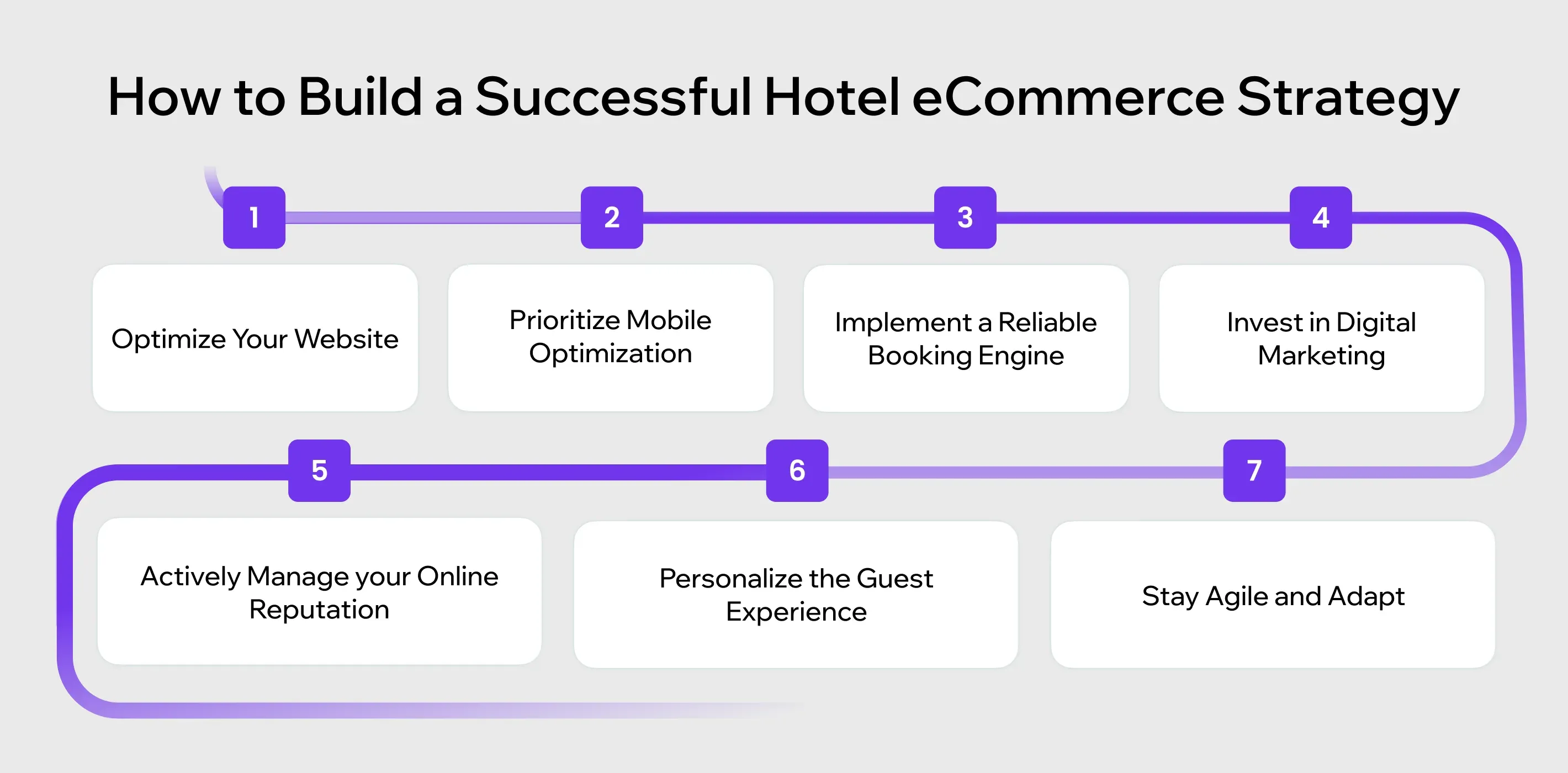
Ensure your website is fast and easy to navigate. The user experience on your website should be as seamless as on other booking sites, OTAs, and metasearch engines. Otherwise, there’s a big risk of losing guests. So, make sure you have clear and visible calls to action, high-quality visuals that vividly show the rooms, and virtual tours that help to build trust.
With most travelers nowadays using their smartphones to research and book trips, a mobile-friendly website is non-negotiable. Make sure your website or hotel app has a responsive design, so the layout adapts to all screen sizes. Fast-loading pages are also important for seamless browsing, while mobile-friendly payment and booking features ensure ultimate convenience.
A frictionless booking process is the foundation of effective hotel eCommerce. A reliable booking engine should integrate directly with your website, offering real-time availability updates, multiple payment options, and instant booking confirmations. If guests encounter a slow or complicated process, they may abandon the reservation and turn to OTAs instead.
Digital marketing is the driving force behind every successful hotel eCommerce strategy. A well-crafted marketing strategy ensures that your hotel remains visible to potential guests at every stage of their booking journey. An SEO strategy helps your hotel rank higher in search results, while targeted online ads put your property in front of travelers searching for accommodations. Social media campaigns and email marketing further engage potential guests, encouraging them to book directly through your website.
Reviews are the first thing potential visitors check before making an actual booking. The more positive feedback they see, the higher the chances are that they’ll book a room. Therefore, keeping an eye on online reviews and ratings and closely monitoring guest feedback is crucial. The key to success here is proactively responding to any issues and coming up with guest-oriented solutions.
CRM tools allow you to capture valuable guest data, such as past bookings, preferred room types, favorite amenities, and special requests. This data helps you understand guest preferences and anticipate their needs, enabling you to offer a more customized experience.
The digital landscape is constantly evolving. Regularly review your strategy, stay updated on industry trends, and be ready to adapt to changes.
Technology. It's the unsung hero we never asked for but somehow can't live without. In hotel eCommerce, it’s become the thing that’s completely flipping how hoteliers run the show. Still relying on phone calls and those good old paper forms? Well, it’s time to catch up.
Technology isn’t just knocking at the door; it’s barging in. From AI chatbots that let your front desk take a breather to revenue systems that can predict pricing like they’ve got a crystal ball, tech is doing all the tough stuff. That means you can focus on the real deal: Getting guests in the door and giving them an experience they won’t forget.
AI in the hospitality industry is stepping up the customer service game, thanks to chatbots that are ready to answer guest questions around the clock. Whether it’s helping with room inquiries or providing local recommendations, these bots make sure guests get the info they need anytime.
But AI doesn’t stop there. It also helps with dynamic pricing, adjusting room rates based on demand, local events, or competitor prices, so hotels can stay competitive and maximize revenue.
With cloud technology, hotels can store their data securely and access it from anywhere. Cloud-powered Property Management Systems (PMS), Customer Relationship Management (CRM), and Revenue Management Systems (RMS) work together effortlessly, keeping front desk staff, housekeeping, and management always in sync.
Hotel-specific apps have become essential for guests on the go. These apps allow travelers to book rooms, check in, and even make special requests straight from their phones. Plus, many apps offer perks like loyalty rewards, exclusive promotions, and personalized notifications, making the whole experience feel tailored to each guest’s preferences.
A solid hotel eCommerce strategy relies on a variety of software, tools, and automation solutions to be effective. For example:
Hotel sales tools streamline lead generation, corporate partnerships, and group bookings, making it easier to secure long-term business and repeat guests.
Channel management software simplifies the complexity of managing multiple booking platforms by syncing inventory and pricing across OTAs, direct booking engines, and metasearch platforms, ensuring real-time updates and reducing overbookings.
Hotel automation tools allow hoteliers to implement self-check-in kiosks, automated guest messaging, and predictive housekeeping schedules, reducing manual workload and improving efficiency.
Speaking of smooth operations, that's exactly where HotelSmarters steps in. Our end-to-end solutions are specifically designed to help you maximize the best guest experience and increase revenue.
How can they become part of your hotel eCommerce strategy? Easy. With our advanced solutions, you can seamlessly connect property management systems (PMS), booking engines, and guest communication tools, ensuring a fully integrated and optimized hospitality experience.
Our hotel middleware platform seamlessly integrates multiple hotel systems, ensuring smooth data flow between all your tools. Meanwhile, our smart hotel room solutions automate in-room experiences with smart assistants that allow you to upsell services, promote special offers, and personalize in-room controls and entertainment.
And if you want to simplify your workflows and processes, our hotel operations software completely centralizes management of your marketing campaigns, billing, eCommerce offers, and more. The best part? All of our solutions are customizable, scalable, and flexible.
The future of hotel eCommerce is about technology trends making things easier and more personalized for guests. As technology continues to steal the show, here’s what we look forward to:
Virtual and augmented reality are changing the way guests experience hotels before even stepping foot on the property. Through immersive 3D tours, travelers can “walk” through rooms, check out amenities, and explore common areas - all from the comfort of their own homes. This helps them make smarter booking decisions, as they get a real feel for the place before committing.
More hotels will start using voice assistants like Amazon Alexa and Google Assistant. Guests will be able to check in, adjust room settings, and even order room service with just their voice. It's all about providing ultimate convenience, and soon, guests will come to expect this feature.
Guests are increasingly preferring touchless experiences. Contactless check-ins, digital keys, and phone payments are already common. Looking ahead, we might see facial recognition technology for check-ins, streamlining the process even further.
AI is already playing a role in setting room prices, but in the future, it could do even more. Imagine a system that adjusts prices dynamically based on factors like weather conditions, local events, or social media trends.
Guests are becoming more eco-conscious, and hotels are taking notice. We’ll see more hotels embracing green technology, from power-saving lighting and energy management systems to sustainable products in the rooms.
Hotel eCommerce is already an essential part of the modern hospitality industry. By embracing digital tools, systems, and strategies, hoteliers can dramatically improve the guest experience, streamline operations, and boost revenue.
With the continuous growth of technology, the opportunities for hotel eCommerce will only expand, offering new ways to personalize guest experiences, optimize pricing, and reach a broader audience. Those who adapt and innovate will be well-positioned for success in the future of hospitality.
Ready to breathe new life into your hotel eCommerce strategy? Contact us and let HotelSmarters bring your vision to life with innovative solutions.

Co-founder / CTO
Armen is the CTO and Co-Founder of inoRain OTT and Co-Founder of HotelSmarters, specializing in advanced streaming technologies, OTT strategy, and interactive TV systems. He builds scalable end-to-end video delivery solutions and drives technical innovation across hospitality and streaming platforms, bridging complex engineering with practical business impact.